


25 May 2026
No Comments
iHuman assignment
iHuman Frances Drake dizziness
Detail | Information |
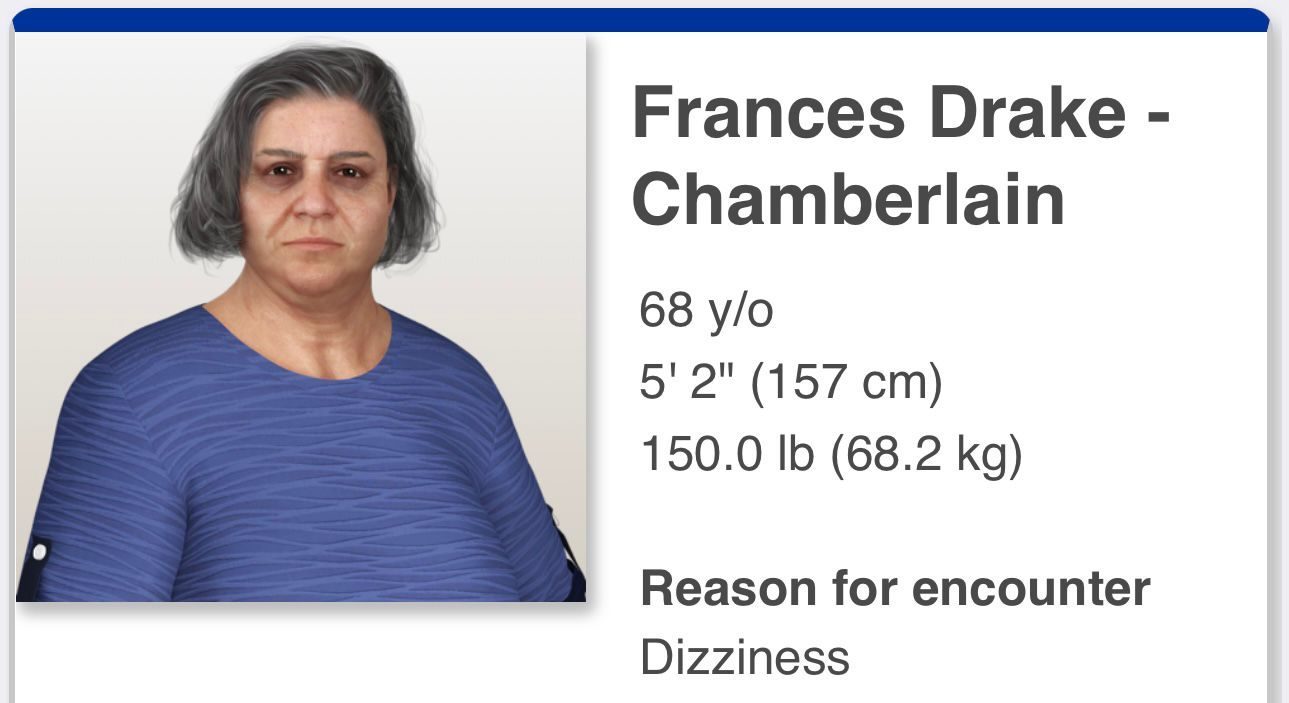
Patient | Frances Drake |
Age and sex | 68 year old female |
Height and weight | 5 ft 2 in (157 cm), 150 lb (68.2 kg) |
Reason for encounter | Dizziness |
Platform | iHuman virtual patient simulation |
iHuman Frances Drake dizziness
68 y/o
5′ 2″ (157 cm)
150.0 lb (68.2 kg)
Reason for encounter
Dizziness
Location
Outpatient clinic with x-ray, ECG, and laboratory capabilities
Frances Drake Dizziness History Questions
- How can I help you today? – I have been having recurrent sudden, brief episodes of dizziness for the past 2 weeks
- Do you have any other symptoms or concerns we should discuss? – just my dizzy episodes
- Do you have a dizziness problem? – Yes. I’ve had recurrent short episodes of dizziness for the past 2 weeks
- When did your dizziness start? – It started about 2 weeks ago
- What are the events surrounding the start of your dizziness? – When I change my head position, such as when I roll over onto my right side while in bed, it feels like I am spinning around, like the room starts moving around in circles. It also made me want to throw up. But I did not actually vomit
- Tell me about the last time you felt dizzy – Just last night, I had two episodes and could not get back to sleep afterward due to the dizziness.
- Does anything make your dizziness better or worse? – Yes, it is triggered by some changes in my head position. It is quite severe when I turn my head abruptly. The only thing that makes it better is when I hold my head still
- Have you fallen? – Nope
- ……..
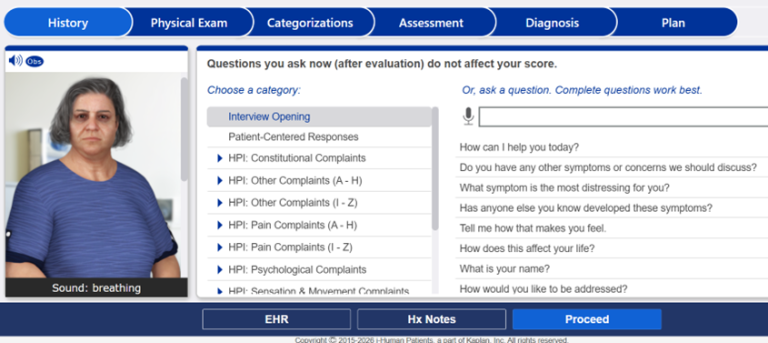
iHuman Frances Drake dizziness Physical Exams Required
- Weight
- Height
- cognitive status
- SpO2
- temperature
- blood pressure
- pulse
- respiration
- temperature
- auscultate heart
- auscultate lungs
- …….
iHuman Frances Drake Dizziness Case Study: Complete Guide to History Questions, Physical Examination, Differential Diagnosis, and Management Plan
The iHuman Frances Drake dizziness case tests whether you can separate a harmless cause of dizziness from a dangerous one in an older adult. Dizziness is one of the most common complaints in primary care, and it is also one of the easiest to get wrong. This guide gives you an overview of the case so you know what to expect before you start. If you want the complete, graded answers, the iHuman Tutor team has the full case ready for you.
Who Is Frances Drake?
Frances Drake is a 68 year old woman who comes to the outpatient clinic because of recurrent dizzy spells over the past couple of weeks. She has a chronic condition that she manages with several daily medications, and her family history includes cardiovascular disease. Those details matter, because they raise the stakes of every decision you make in the encounter.
In older adults, dizziness can come from the inner ear, the brain, the heart, blood pressure changes, or medications. iHuman grades you on how well you narrow that list. A strong student gathers the right details early, while a rushed student misses the clues that point to the actual diagnosis.
iHuman Frances Drake History Questions: What the Case Rewards
The history is where most of the points in this case are won or lost. iHuman expects a focused, systematic interview rather than a long list of random questions. In general terms, your history questions should explore:
- The character of the dizziness and how the patient experiences it
- Onset, duration, frequency, and timing of the episodes
- Triggers, aggravating factors, and anything that brings relief
- Associated symptoms across the ear, neurologic, and cardiovascular systems
- Her chronic conditions, current medications, and recent changes
- Family history, social history, and safety at home
The exact wording, the questions the case scores as essential, and the red flag screen that earns full credit are all in our complete iHuman case answers.
Physical Examination in the Frances Drake Dizziness Case
The physical examination in this case is short but highly targeted. Vital signs, including how her blood pressure behaves with position change, give you an early read on several possible causes. Beyond that, iHuman looks for:
- A careful neurologic examination that can separate peripheral from central causes
- Ear and hearing assessment
- Cardiovascular findings relevant to an older adult with dizziness
- One specialized bedside maneuver that many students either skip or perform at the wrong point
That single maneuver often decides whether you reach the correct diagnosis. We walk you through which exams to choose, in what order, and how to document the findings in objective EHR language in our iHuman case help.
Building the Differential Diagnosis for Dizziness
The differential diagnosis for dizziness in a 68 year old is broad, and iHuman checks both your list and your ranking. Expect to weigh possibilities from several categories:
- Peripheral vestibular (inner ear) disorders
- Central neurologic causes that must not be missed
- Cardiovascular and blood pressure related causes
- Medication related and metabolic causes
The challenge is matching each possibility to the evidence you gathered. iHuman scores you on supporting and refuting findings, not just names on a list. Our answer key gives the full ranked differential diagnosis, the final diagnosis, and the clinical reasoning that ties each one to the case findings.
Diagnostic Tests and the Management Plan
The iHuman menu offers laboratory panels, an electrocardiogram, and neuroimaging. Part of your grade depends on knowing which tests add value and which ones are unnecessary for this presentation. Ordering everything does not earn extra credit, and a test without a clear rationale can weaken your plan.
The management plan should cover:
- Treatment options suited to an older adult, including what to avoid
- Continuation or review of her current medications
- Referrals and when they are warranted
- Patient education, especially safety and fall prevention
- Follow up timing and red flag symptoms that require emergency care
We provide the full management plan with complete prescriptions, evidence based rationales, and APA 7 references from current peer reviewed literature.
Common Mistakes Students Make in This Case
- Treating all dizziness as the same symptom instead of clarifying what the patient actually feels
- Skipping a key bedside maneuver or performing exams in the wrong order
- Over ordering tests without a clear rationale
- Choosing medications that carry extra risk for adults over 65
- Writing a problem statement that is too long or misses pertinent negatives
- Leaving red flag return precautions out of the follow up plan
If you are working through similar presentations, see our breakdowns of the Ashley Wilson shortness of breath case, the Mariya Rivera fatigue and listlessness case, and the Kristina Hart pain when I pee case.
Frequently Asked Questions
What is the iHuman Frances Drake case about? It is an iHuman virtual patient case of a 68 year old woman with recurrent episodes of dizziness, seen in an outpatient clinic. You complete the history, physical examination, differential diagnosis, diagnostic tests, and management plan.
How many history questions does the Frances Drake case need? The case rewards a focused interview that covers symptom characteristics, triggers, associated symptoms, medications, and family history. The full list of scored questions is included in our answer package.
Is neuroimaging required in the Frances Drake dizziness case? That depends on your history and exam findings. Knowing when imaging adds value is part of the grade, and our answers explain the rationale.
Where can I get the complete Frances Drake iHuman answers? Complete answers, including EHR documentation and references, are available from iHuman Tutor.
Get the Complete iHuman Frances Drake Dizziness Answers
This overview shows you the shape of the case, but your grade depends on the details. Our complete Frances Drake package includes:
- Every scored history question
- The full physical examination with objective findings
- A ranked differential diagnosis and final diagnosis
- Diagnostic test selection with rationale
- A complete management plan with prescriptions, education, and follow up
- Full EHR documentation with current APA 7 references
You pay only after you are satisfied with the work. Check our pricing plans, book one on one tutoring, or contact us today. For the fastest response, chat with us on WhatsApp and get your Frances Drake answers now.