


2 November 2026
No Comments
iHuman assignment
iHuman Janet Riley confusion and memory loss answers
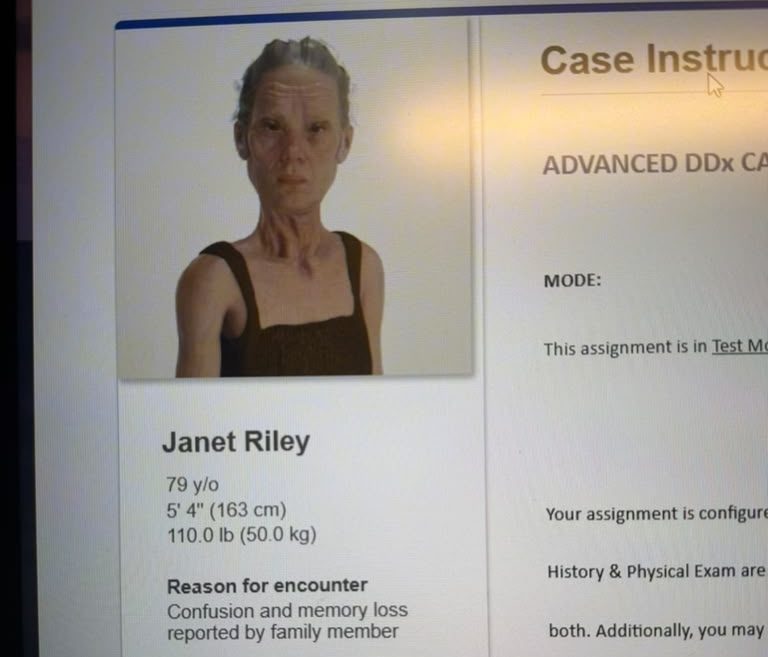
Sophia King 79 y/o
5′ 4″ (163 cm) 110.0 lb (50.0 kg)
Reason for encounter Confusion and memory loss reported by family member
iHuman Janet Riley confusion and memory loss 79 year old answers history questions
- Does she have any other symptoms or concerns we should discuss? (witness)
- What is your name? (patient)
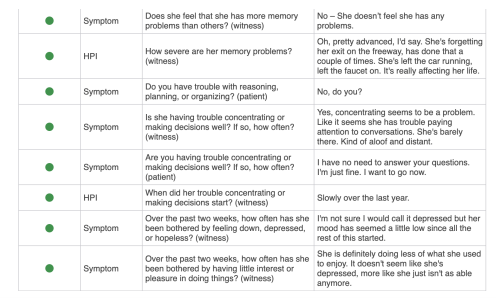
- Does she feel that she has more memory problems than others? (witness)
- How severe are her memory problems? (witness)
- Do you have trouble with reasoning, planning, or organizing? (patient)
- Is she having trouble concentrating or making decisions well? If so, how often? (witness)
- Are you having trouble concentrating or making decisions well? If so, how often? (patient)
- When did her trouble concentrating or making decisions start? (witness)
- Over the past two weeks, how often has she been bothered by feeling down, depressed, or hopeless? (witness)
- Over the past two weeks, how often has she been bothered by having little interest or pleasure in doing things? (witness)
- When did……
iHuman Janet Riley 79 year old confusion and memory loss answers physical exams required
- Weight
- Height
- cognitive status
- SpO2
- temperature
- blood pressure
- pulse
- respiration
- temperature
- auscultate heart
- auscultate lungs
- assess …….
What Is the iHuman Janet Riley Case?
The iHuman Janet Riley case is a geriatric primary care simulation in which a 79 year old woman is brought to an outpatient clinic by her worried daughter for confusion and memory loss. It is one of the most frequently assigned cognitive cases in nurse practitioner programs, and it tests far more than recall of facts. Students must gather a history from two people who see the problem very differently, interpret screening tools, and build a safe, family centered plan.
If this case is sitting in your iHuman dashboard right now, this overview explains what the case expects from you, where students usually lose points, and how to get complete iHuman Janet Riley answers when you need them.
Patient Snapshot
Detail | Case information |
|---|---|
Patient | Janet Riley |
Age | 79 years |
Height and weight | 5 ft 4 in (163 cm), 110.0 lb (50.0 kg) |
Reason for encounter | Confusion and memory loss reported by a family member |
Setting | Outpatient clinic with x ray, ECG, and laboratory capabilities |
Janet arrives reluctant and dismissive, while her daughter describes a decline that has been building for some time. That tension between patient and care partner is the heart of the case, and iHuman scores how well you navigate it.
iHuman History Questions: Why This Case Is Tricky
The history portion carries much of the grade. iHuman expects you to direct questions to the right person, because the patient and her daughter are both present and their answers rarely match. Asking the wrong person, or skipping the caregiver’s perspective entirely, costs pivotal points.
Strong submissions explore the timeline of the change, its effect on daily life and independence, mood, safety at home and on the road, past illnesses, medications, and social habits. The case also rewards communication: setting an agenda, building rapport with a reluctant patient, and understanding how the illness affects the family.
Students commonly miss several pivotal history questions in this case. Our iHuman answers library shows exactly which questions earn credit and who should be asked.
iHuman Physical Examination: Focus Over Volume
In the Janet Riley case, clicking every exam option does not raise your score. iHuman grades whether your physical examination is targeted to the complaint and to her risk profile. Expect to think about mental status, cognitive screening instruments, the neurologic exam, and the systems that could reveal a treatable or reversible cause.
Interpreting the screening scores correctly matters just as much as ordering them. Several students lose points by choosing exams that add nothing or by overlooking the findings that support the final diagnosis. If you want a guided walkthrough rather than guesswork, our one on one iHuman tutoring covers exam selection step by step.
Building the Differential Diagnosis
Cognitive change in an older adult has a wide differential diagnosis, and iHuman expects a ranked list rather than a single guess. Your list should weigh neurodegenerative causes, vascular contributions, mood disorders, medication effects, metabolic problems, and structural brain conditions. The order of your list and the findings you link to each condition are both graded.
The challenge is that several conditions in this case look alike early on. Matching each finding to the correct diagnosis as supporting or refuting evidence is where most points are won or lost. Our complete Janet Riley case answers include the expert ranked differential with each finding mapped correctly.
Diagnostic Tests and the Management Plan
iHuman separates tests that are required now from tests that are reasonable but optional, and it penalizes ordering low value or invasive studies too early. You will need to justify laboratory work and decide whether imaging belongs in the first visit, using current guideline based reasoning.
The management plan is where this case becomes truly holistic. A complete plan addresses medication review, safety for an older adult who lives alone, driving, finances, caregiver support, referrals, advance care planning, and a clear follow up schedule with warning signs. Graders look for a plan that protects both the patient and her family, not just a prescription.
See our pricing page for single case and full course options that include a fully written management plan.
EHR Documentation and Common Mistakes
Many programs pair this case with a written EHR note covering key findings, a case problem statement, HPI, review of systems, physical exam, assessment, and plan with current citations. Frequent errors in the Janet Riley case include:
- Relying only on the patient’s account and missing the caregiver’s history
- Writing vague exam language instead of objective, measurable findings
- Listing a differential without linking findings to each diagnosis
- Building a plan that ignores home safety, driving, and caregiver needs
- Citing outdated sources instead of peer reviewed evidence from the last five years
Similar documentation challenges appear in other cases, such as the Ashley Wilson shortness of breath case and the Kristina Hart pain when I pee case.
Frequently Asked Questions
What is the iHuman Janet Riley case about? It is a simulation of a 79 year old woman brought to clinic by her daughter for confusion and memory loss. Students complete the history, physical examination, differential diagnosis, tests, and management plan.
Who should I ask history questions in the Janet Riley case? Both the patient and her daughter are present, and iHuman scores whether each question goes to the right person. The full answer key lists who to ask for every pivotal question.
Why is my differential diagnosis score low in iHuman? Low scores usually come from poor ranking or from findings linked to the wrong diagnosis. Expert answers show the correct order and mapping.
Can I get help with the Janet Riley EHR documentation? Yes. iHuman Tutor provides complete, original EHR notes with current APA citations for this case.
Get the Complete Janet Riley iHuman Answers
This overview shows what the case demands, but the points come from the details: every pivotal history question, the targeted physical examination, the ranked differential diagnosis, the correct tests, and a complete management plan. iHuman Tutor delivers all of it, written by experienced nurse practitioners, with 24/7 support and payment only after you are satisfied.
Order your Janet Riley case answers today or chat with a tutor on WhatsApp to get started.