


8 July 2026
No Comments
iHuman assignment
iHuman Douglas Bell left knee pain for 2 days case answers
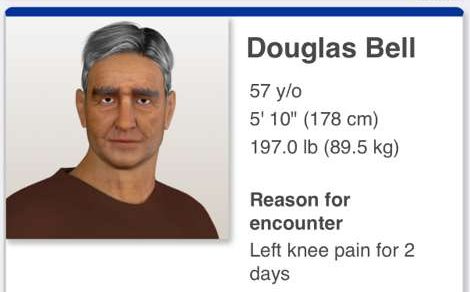
Douglas Bell
57 y/o
5′ 10″ (178 cm)
197.0 lb (89.5 kg)
Reason for encounter
Acute left knee pain for 2 days
History Questions
- How can I help you today?
- Do you have any other symptoms or concerns we should discuss?
- How does this affect your life?
- Have you been having fevers?
- Have you had any trauma to your knee(s)?
- Is there any instability in your knee(s)?
- Do you have any pain in your knee(s)?
- Do your knees catch, lock, or pop?
- What are the events surrounding the start of the pain in your knee(s)?
- Does anything make the pain in your knee(s) better or worse?
- ……….
Douglas Bell Physical Exams Answers
- Weight
- Height
- cognitive status
- SpO2
- temperature
- blood pressure
- pulse
- respiration
- temperature
- auscultate heart
- auscultate lungs…….
iHuman Douglas Bell Left Knee Pain for 2 Days Case Summary: History Questions, Physical Examination, Differential Diagnosis, and Management Overview
The iHuman Douglas Bell left knee pain for 2 days case is one of the most educational musculoskeletal simulations for healthcare students. This virtual patient challenges learners to differentiate between several causes of acute monoarticular knee pain while using evidence-based clinical reasoning. Rather than relying on a single symptom, students must integrate the patient’s history, physical examination findings, laboratory studies, and diagnostic testing to develop appropriate differential diagnoses and an individualized management plan.
If you are preparing for this simulation, this overview explains what to expect without revealing the complete case answers. For a comprehensive walkthrough, visit the iHuman Tutor guide for the case:
https://ihumantutor.com/ihuman-douglas-bell-left-knee-pain-for-2-days-case/
You can also explore additional iHuman resources and case reviews at:
Patient Overview
The virtual patient is a 57-year-old retired construction worker who presents with left knee pain for 2 days. The pain began gradually without a preceding traumatic injury and progressively worsened until it significantly limited ambulation. The patient reports increasing swelling, redness, and difficulty bearing weight on the affected extremity.
Unlike many orthopedic injuries, the history does not include a fall, twisting injury, sports-related trauma, or direct blow to the knee. This immediately broadens the differential diagnosis beyond ligamentous or meniscal injuries and requires careful consideration of inflammatory, infectious, and crystal-induced arthropathies.
Because the patient has several medical and lifestyle risk factors, students must recognize how these elements influence the diagnostic process.
History Questions
One of the most important components of this iHuman case is obtaining a complete history. Students who ask thorough and organized history questions gather valuable clues regarding:
Symptom onset and progression
Pain characteristics
Aggravating and relieving factors
Functional limitations
Previous episodes of similar symptoms
Medication history
Past medical conditions
Family history
Social history
Lifestyle and dietary habits
The patient’s responses gradually reveal multiple risk factors that may contribute to inflammatory joint disease while simultaneously helping exclude several alternative diagnoses.
Because iHuman scoring rewards comprehensive interviewing, missing key history questions may reduce the overall case score even if the final diagnosis is ultimately correct.
Physical Examination
The physical examination provides equally important diagnostic information.
Students are expected to perform a focused musculoskeletal examination while also completing a comprehensive general examination.
Important physical assessment areas include:
Inspection of both knees
Assessment for erythema
Joint swelling
Localized warmth
Joint effusion
Active and passive range of motion
Muscle strength
Gait evaluation
Examination of surrounding joints
Foot examination
Neurovascular assessment
One particularly significant finding occurs outside the knee itself, emphasizing why every painful joint evaluation should include examination of adjacent joints and extremities.
The remainder of the examination helps narrow the differential diagnosis while identifying findings that either support or argue against infectious, traumatic, degenerative, or inflammatory conditions.
Laboratory Studies and Diagnostic Testing
The Douglas Bell left knee pain for 2 days simulation also emphasizes appropriate diagnostic workup.
Students should understand the purpose of ordering laboratory tests that evaluate inflammation, infection, metabolic abnormalities, and crystal arthropathies.
Common investigations include inflammatory markers, metabolic studies, hematologic testing, and joint aspiration.
Synovial fluid analysis remains one of the most valuable diagnostic tools for patients presenting with an acute swollen joint because it assists in distinguishing inflammatory arthritis from septic arthritis and other causes of monoarthritis.
Rather than simply memorizing which tests to order, learners should understand why each study contributes to the diagnostic process.
Differential Diagnosis
One of the primary educational objectives of this case is constructing an evidence-based differential diagnosis.
Several conditions can present with acute unilateral knee pain, swelling, and impaired mobility. Students must compare the patient’s history, examination findings, and laboratory results before determining the most likely explanation.
Potential differential diagnoses may include:
Crystal-induced arthritis
Septic arthritis
Osteoarthritis flare
Rheumatoid arthritis
Reactive arthritis
Pseudogout
Septic bursitis
Internal derangement of the knee
Cellulitis
Traumatic knee injury
Each diagnosis should be systematically evaluated using supporting and opposing clinical evidence.
Management Plan
Developing an appropriate management plan is another major learning objective.
Treatment extends beyond prescribing medications. Students should demonstrate a comprehensive understanding of patient-centered care by addressing:
Appropriate pharmacologic therapy
Non-pharmacologic treatment
Diagnostic follow-up
Medication adjustments
Lifestyle modifications
Dietary counseling
Alcohol counseling
Patient education
Monitoring plans
Follow-up appointments
Referral recommendations when appropriate
Successful management requires integrating the patient’s comorbid conditions, current medications, and individual risk factors into the overall treatment strategy.
Why This iHuman Case Is Challenging
Many students initially assume this is simply a straightforward knee pain case. However, the simulation requires considerably more clinical reasoning.
Success depends on recognizing subtle historical clues, identifying important physical examination findings, selecting appropriate diagnostic tests, and constructing a logical differential diagnosis before proposing an evidence-based management plan.
The case also reinforces the importance of considering systemic disease when evaluating what initially appears to be an isolated musculoskeletal complaint.
Need Help With the Complete Case?
If you’re looking for detailed guidance on the iHuman Douglas Bell left knee pain for 2 days case, including:
Complete history questions
Physical examination walkthrough
Recommended diagnostic testing
Differential diagnosis discussion
Evidence-based management plan
Clinical reasoning tips
Documentation examples
visit the complete case guide at:
https://ihumantutor.com/ihuman-douglas-bell-left-knee-pain-for-2-days-case/
You can also browse dozens of additional iHuman case answers, study guides, and virtual patient resources at:
Whether you are preparing for an assignment, improving your clinical reasoning skills, or reviewing difficult simulations, these resources provide structured explanations designed to help healthcare students better understand the decision-making process behind each iHuman case.