


20 January 2025
No Comments
iHuman assignment
iHuman Amanda Wheaton fever and sore throat answers
Patient: Amanda Wheaton | Age: 23 years | Sex: Female |
Height: 5’7″ (170 cm) | Weight: 120.0 lb (54.5 kg) | Encounter Time: Approximately 1430 |
Reason for Encounter: Sore throat | ||
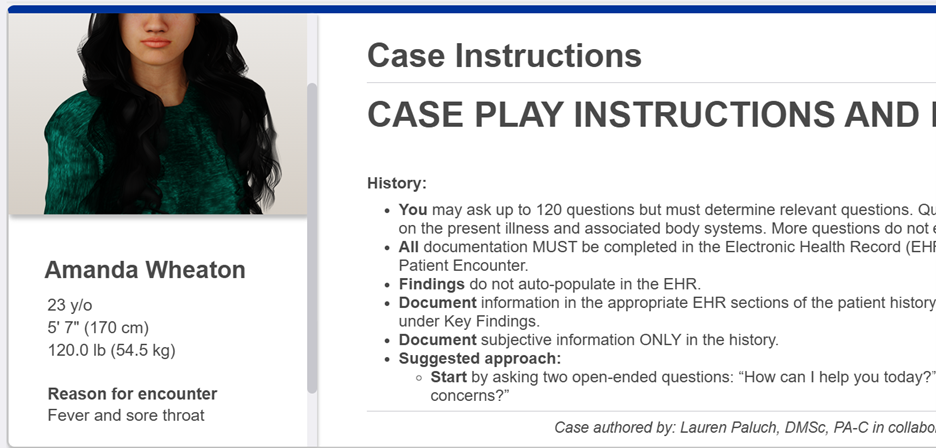
Amanda Wheaton
23 y/o
5′ 7″ (170 cm)
120.0 lb (54.5 kg)
Reason for encounter
Fever and sore throat
History Questions:
- How can I help you today?
- Do you have any other symptoms or concerns we should discuss?
- Do you have a sore throat?
- When did the events start?
- What are the events surrounding the start of your sore throat?
- Does your sore throat come and go?
- How severe is your sore throat?
- Does anything make your sore throat better or worse?
- What treatments have you had for your sore throat?
- Do you have a problem swallowing?
- …….
Complete Guide to the iHuman Amanda Wheaton Case: Fever and Sore Throat
Navigating clinical simulation platforms can be challenging for nursing and medical students preparing for advanced clinical practice. One of the most frequently assigned virtual patient encounters in advanced physical assessment courses (such as NR509) is the iHuman Amanda Wheaton case.
This comprehensive case overview breaks down how to approach history taking, physical examination findings, building a clinical differential diagnosis, and organizing a patient-centered care approach for a young adult presenting with fever and sore throat.
Patient Demographic & Clinical Presentation Overview
Understanding the core baseline characteristics of the patient is the critical first step before launching into targeted history questions:
Patient Name: Amanda Wheaton
Age & Gender: 23-year-old female
Chief Complaint: Acute onset of severe fever and sore throat accompanied by painful swallowing (odynophagia).
Clinical Context: A busy 23 year old law student residing with roommates, presenting with continuous pharyngeal discomfort that significantly limits oral intake.
Mastering the iHuman History Taking Section
When completing the subjective history portion on the iHuman platform, scoring high requires asking high-yield, problem-focused history questions.
To thoroughly evaluate a chief complaint of acute pharyngitis and pyrexia, students should structure their inquiries using the OLDCARTS framework:
1. History of Present Illness (HPI)
Onset & Duration: Inquire about the exact onset timeline (e.g., sudden vs. gradual over 48 hours).
Character & Severity: Quantify the pain on a 1–10 scale and determine if the sore throat feels sharp, burning, or constant.
Aggravating & Relieving Factors: Assess what exacerbates the throat pain (e.g., swallowing solids vs. liquids) and whether over-the-counter analgesics provide temporary relief.
Associated Symptoms: Screen carefully for accompanying fever, body chills, headache, fatigue, or tender neck swelling.
2. Crucial Pertinent Negatives
Asking negative questions is just as vital for narrowing down the differential diagnosis as identifying positive symptoms. Key negative history questions include checking for:
Absence or presence of a cough.
Absence of upper respiratory symptoms (rhinorrhea, sinus congestion, ear pain).
Absence of respiratory distress, dyspnea, or wheezing.
3. Medical, Social, and Exposure History
Sick Contacts: Ask about exposure to individuals with similar upper respiratory or streptococcal infections (such as roommates or peers).
Immunization Status: Check for seasonal influenza and routine vaccines.
Past Medical History: Document any past episodes of infectious mononucleosis or childhood illnesses.
Targeted Physical Examination Steps
A systematic physical examination helps gather measurable, objective evidence to support clinical decision-making on virtual simulation platforms.
When performing an exam for Amanda Wheaton, focus on the following key anatomical regions:
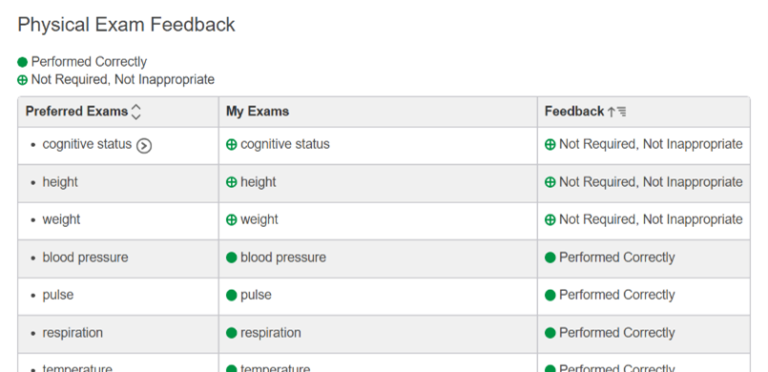
Vital Signs Inspection: Assess body temperature (checking for pyrexia above 100.4∘F), heart rate, blood pressure, respiratory rate, and oxygen saturation.
HEENT & Oropharyngeal Examination:
Inspect the posterior pharynx and tonsillar pillars for erythema, tonsillar enlargement, and presence of purulent exudates.
Evaluate the uvula position to ensure it remains strictly midline without deviation.
Inspect the oral mucosa for aphthous ulcers, vesicles, or mucosal petechiae.
Cervical Lymph Node Palpation: Systematically palpate the anterior and posterior cervical lymph chains, submandibular, and submental nodes to identify lymphadenopathy, size, mobility, and tenderness.
Cardiopulmonary Auscultation: Listen to heart sounds and bilateral breath sounds to rule out lower respiratory involvement or systemic distress.
For detailed walkthroughs and study assistance on virtual simulation modules, check out iHumanTutor.com for expert guidance on clinical cases.
Developing a Clinical Differential Diagnosis
Synthesizing subjective and objective findings allows clinicians to formulate a prioritized differential diagnosis. For a 23 year old presenting with acute exudative pharyngitis and high fever, clinical decision-making tools—such as the Modified Centor (McIsaac) Score—help categorize probability:
Bacterial Etiologies: Conditions such as Group A Streptococcus (GAS) pharyngitis are heavily considered when criteria like fever, tonsillar exudates, tender anterior cervical lymphadenopathy, and absence of cough are met.
Viral Etiologies: Common viral pharyngitis, acute Epstein-Barr Virus (EBV / Infectious Mononucleosis), or influenza must be weighed against past history and systemic signs.
Emergent Complications: Serious localized conditions—including peritonsillar abscess (PTA)—must be continuously monitored by checking for soft palate swelling, asymmetric tonsillar displacement, or difficulty opening the jaw (trismus).
Structuring the Management Plan Framework
While each patient encounter requires individualized evaluation based on real-time clinical testing (such as rapid antigen swabs or throat cultures), an effective clinical management plan generally addresses:
Diagnostic Workup:
Pharmacologic Interventions: Formulating evidence-based medication strategies, including appropriate antibiotic selection when bacterial etiology is suspected, alongside nonsteroidal anti-inflammatory drugs (NSAIDs) for pain control.
Supportive & Palliative Care:
Patient Education & Isolation Protocols: Advising on transmission precautions, hygiene measures (e.g., replacing toothbrushes), and medication compliance.
Red-Flag Return Instructions: Outlining explicit warning signs that necessitate immediate emergency evaluation.
Need Assistance with Virtual Patient Cases?
Mastering clinical decision-making in nursing and medical education requires practice, accuracy, and clear reasoning. If you are looking for study aids, step-by-step guides, and breakdown strategies for clinical simulation scenarios, visit the iHuman Amanda Wheaton Fever and Sore Throat Study Guide to enhance your learning and clinical confidence.