


15 July 2026
No Comments
iHuman assignment
iHuman Alicia Smiley itchy skin 13 year old answers
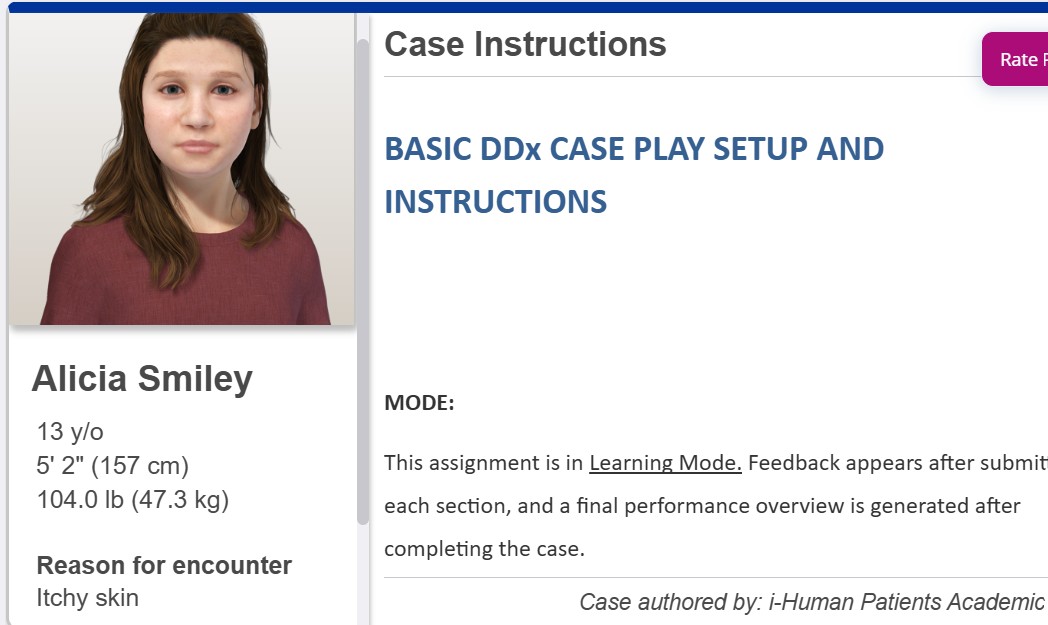
Alicia Smiley
13 y/o
5′ 2″ (157 cm)
104.0 lb (47.3 kg)
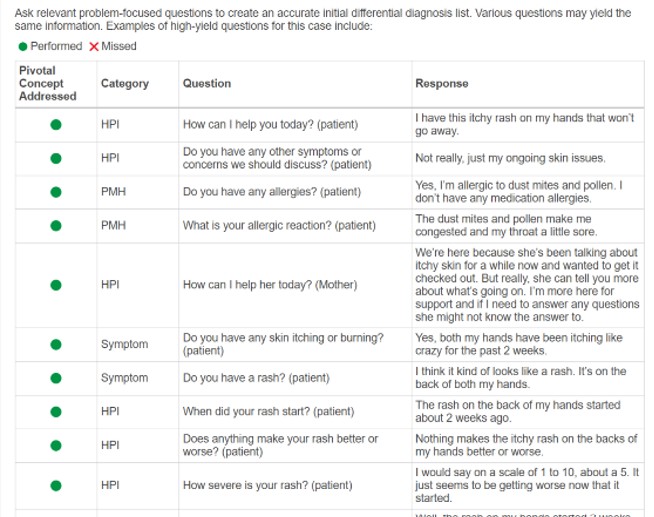
iHuman Alicia Smiley itchy skin answers history questions
- How can I help you today? (patient)
- Do you have any other symptoms or concerns we should discuss? (patient)
- Do you have any allergies? (patient)
- What is your allergic reaction? (patient)
- How can I help her today? (Mother)
- Do you have any skin itching or burning? (patient)
- Do you have a rash? (patient)
- When did your rash start? (patient)
- Does anything make your rash better or worse? (patient)
- How severe is your rash? (patient)
- Are you…
iHuman Alicia Smiley itchy skin 13 year old answers physical exams required
- Weight
- Height
- cognitive status
- SpO2
- temperature
- blood pressure
- pulse
- respiration
- temperature
- auscultate heart
- auscultate lungs
- assess …….
iHuman Alicia Smiley Case Study: Navigating Pediatric Atopic Dermatitis, Clinical History, and Management
The iHuman Alicia Smiley clinical case study is a corner-stone scenario for advanced practice nursing and medical students learning to navigate complex pediatric dermatological presentations. Alicia Smiley is a 13 year old female who presents to an outpatient clinic with a chief complaint of progressively worsening, highly itchy skin on her hands.
For students and clinicians seeking iHuman case answers, analyzing this case requires a meticulous evaluation of the patient’s personal history, systematic history questions, a targeted physical examination, and a clear path toward a structured differential diagnosis and management plan.
Below, we break down the vital clinical components of the case study to help you optimize your clinical reasoning and master the platform’s rubrics on ihumantutor.com.
The Clinical Challenge: Alicia Smiley’s Subjective History
Successfully solving the Alicia Smiley case on the iHuman platform begins with asking the right history questions. When a 13 year old patient presents with a primary complaint of intense pruritus and an active rash on the hands, clinicians must dig deep into both the timeline of the symptoms and potential environmental triggers.
The Presenting Rash: Alicia’s itchy skin and rash began 2 weeks prior to her visit. The lesions are localized on the dorsal aspects of both hands and have spread around her elbows.
The Chronic Baseline: She reports a 7-month history of generalized dry skin (xerosis) that worsens significantly during the winter.
The Atopic Triad: Crucial to her medical history are her pre-existing conditions: she has a 4-year history of asthma and a 6-year history of environmental allergies (dust mites and pollen).
Recent Environmental Exposures: Her family adopted a shelter cat 6 weeks prior to the visit, and she received a new set of metal “stacker rings” from her best friend 1 month ago. Furthermore, she has been trying to treat her dry skin with a heavily fragranced “cherry blossom” lotion.
Understanding how these historical clues interact is crucial for building a strong clinical case on iHuman.
Objective Assessment: Physical Examination Findings
To progress through the iHuman Alicia Smiley itchy skin 13-year-old answers section, students must perform a focused physical examination and interpret objective data with absolute clinical precision.
Skin Inspection (Dorsal Hands): The dorsal aspects of her hands exhibit erythematous, dry, flaky plaques with poorly demarcated borders. There are no signs of secondary bacterial infection (no weeping, crusting, or pustules).
Flexural Involvement: The bilateral antecubital fossae (elbow creases) show prominent lichenification—visibly thickened, leathery skin resulting from chronic rubbing and scratching.
Lower Extremities: Mild generalized dry skin is noted on her legs. Crucially, she displays a negative Auspitz sign when the scaling skin is evaluated.
Vitals and Systemic Signs: All vital signs remain fully stable. Cardiopulmonary, HEENT, abdominal, and lymphatic examinations show no systemic abnormalities, effectively ruling out acute respiratory flares or systemic infections.
Formulating the Differential Diagnosis (DDx)
A strong clinical summary must weigh multiple competing hypotheses. In this pediatric encounter, the primary diagnostic pathways include:
1. Atopic Dermatitis (Eczema)
Given Alicia’s personal history of asthma and allergic rhinitis (completing the atopic triad), her chronic winter xerosis, and the bilateral, poorly demarcated, itchy plaques on her hands and flexural regions, chronic eczema is the leading diagnostic consideration. The lichenification in her antecubital fossae is a classic sign of chronic scratching.
2. Allergic Contact Dermatitis (ACD)
The introduction of her new metal stacker rings 1 month ago raises a strong suspicion for nickel-induced contact dermatitis. However, because the rash is centered on the backs of her hands rather than the skin directly beneath the rings, ACD may be a secondary complicating factor rather than the sole cause.
3. Tinea Corporis / Tinea Manuum
The adoption of a shelter cat 6 weeks ago introduces a possible zoonotic fungal transmission (ringworm). While possible, fungal infections typically present as asymmetric, well-demarcated annular plaques with active scaling borders rather than symmetric, poorly demarcated bilateral eczema. A potassium hydroxide (KOH) skin scraping is an excellent tool to rule this out.
Designing the Therapeutic Management Plan
An effective clinical management plan must address both acute inflammation and long-term skin barrier restoration. When documenting your plan on the iHuman platform, structure your interventions as follows:
Pharmacological Care: Utilizing a short, controlled course of a low-to-medium potency topical corticosteroid (such as Triamcinolone acetonide 0.025%) to target active inflammatory hand and elbow lesions.
Barrier Restoration: Transitioning the patient to a thick, completely fragrance-free emollient applied immediately after lukewarm baths to lock in essential moisture.
Trigger Elimination: Instructing the patient to immediately stop using the scented cherry blossom lotion and temporarily remove the metal rings.
Follow-Up: Scheduling a clinical re-check in 2 weeks to evaluate treatment efficacy, screen for any adverse topical steroid effects, and provide ongoing atopic dermatitis education.
Mastering your iHuman Case Studies with Expert Guidance
Platform cases like iHuman Alicia Smiley can be incredibly challenging due to the strict grading rubrics around history questions, specific physical exam maneuvers, and precise diagnostic documentation.
If you are looking to improve your clinical diagnostic skills, master pediatric dermatology modules, or need comprehensive iHuman Alicia Smiley case answers, explore the expert guides, breakdown tutorials, and structured resources available at ihumantutor.com to confidently ace your advanced nursing and clinical practice courses.