


11 April 2026
No Comments
iHuman assignment
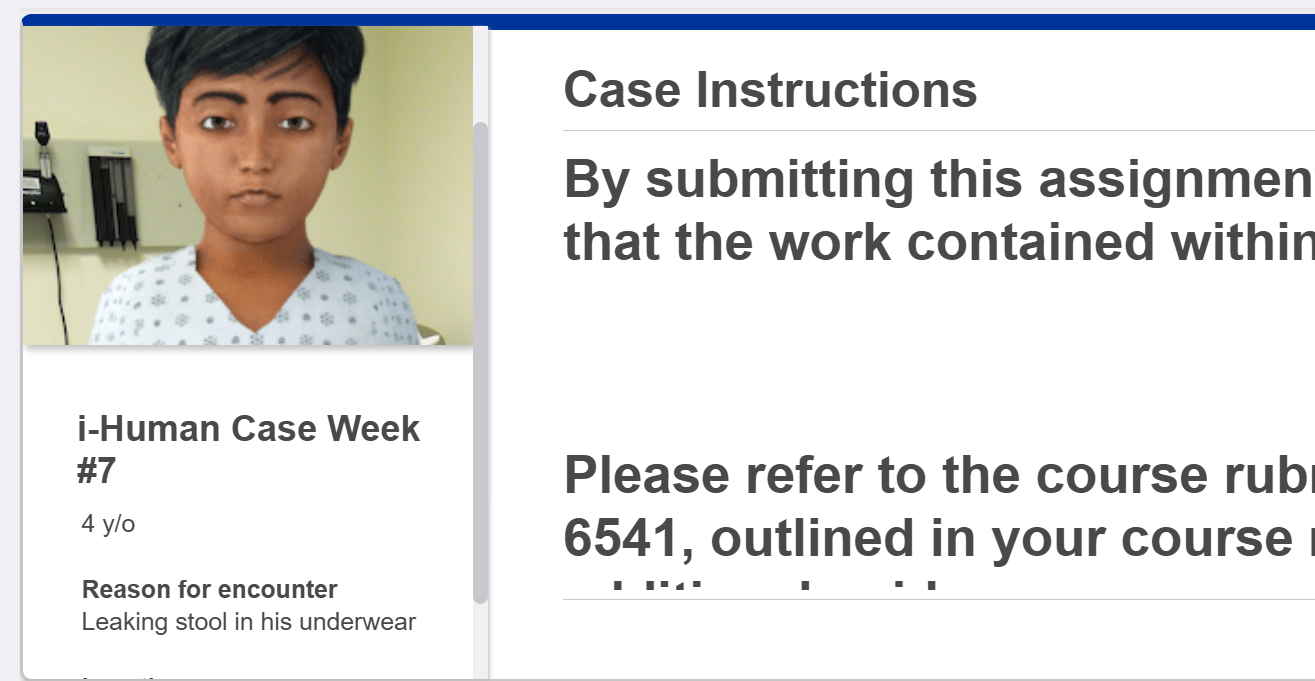
iHuman Week 7 Leaking stool in his underwear 4 year old NR6541
4 y/o
Reason for encounter
Leaking stool in his underwear
Location
Outpatient clinic with x-ray, ECG, and laboratory capabilities
Maura Smith iHuman Dizziness History Questions
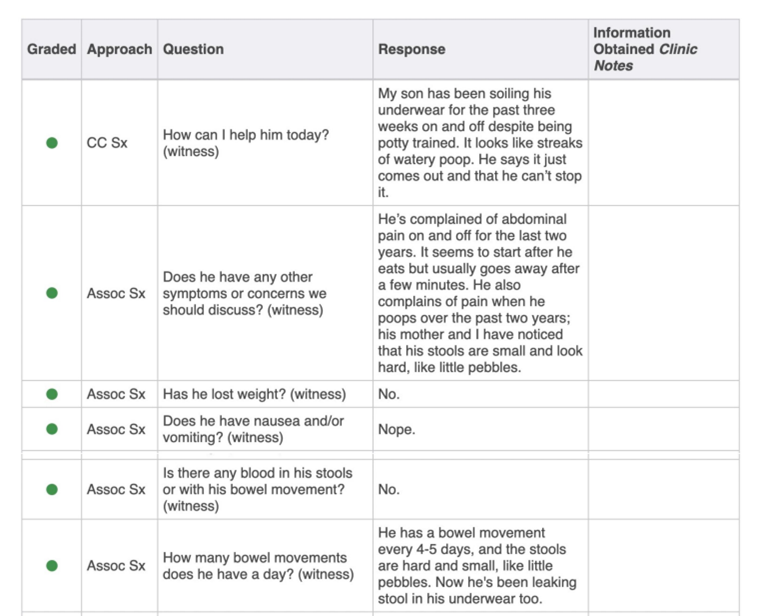
- How can I help him today? (witness)
- Does he have any other symptoms or concerns we should discuss? (witness)
- Has he lost weight? (witness)
- Does he have nausea and/or vomiting? (witness)
- Is there any blood in his stools or with his bowel movement? (witness)
- How many bowel movements does he have a day? (witness)
- Are you………
i-Human Case Week #7
4 y/o
Leaking stool in his underwear
- Weight
- Height
- cognitive status
- SpO2
- temperature
- blood pressure
- pulse
- respiration
- temperature
- auscultate heart
- auscultate lungs
- assess …….
iHuman 4-Year-Old Leaking Stool Case (NR6541 Guide)
The iHuman leaking stool in his underwear 4 year old case is a key pediatric scenario in NR6541, designed to strengthen your clinical reasoning skills. This case focuses on evaluating a young child with fecal soiling, requiring a structured approach through history questions, physical examination, differential diagnosis, and a comprehensive management plan.
When approaching this iHuman case, start with detailed history questions. Important areas include bowel movement frequency, stool consistency, dietary habits, and associated symptoms such as abdominal pain or straining. In this case, the child has a history of chronic constipation, infrequent bowel movements, and stool leakage—suggestive of overflow incontinence (encopresis). Psychosocial factors, such as stress from family changes, should also be explored.
Next, a focused physical examination is essential. Assess vital signs, abdominal tenderness, bowel sounds, and growth parameters. While many findings may appear normal, subtle signs like mild abdominal discomfort can support the diagnosis. A rectal exam may be considered if clinically appropriate.
Formulating a strong differential diagnosis is critical. In this scenario, functional constipation remains the most likely cause given the clinical history and presentation.
The management plan should be evidence-based and family-centered. Treatment typically includes an initial clean-out phase, followed by maintenance therapy to ensure regular bowel movements. Lifestyle modifications—such as increasing fiber intake, reducing excessive milk consumption, improving hydration, and establishing a toileting routine—are essential for long-term success.
For reliable iHuman answers and expert assistance with NR6541 cases, visit 👉 https://ihumantutor.com. Their resources provide step-by-step guidance to help you master pediatric case studies with confidence.