


3 June 2025
No Comments
iHuman assignment
iHuman Tod Gouseau acute left knee pain answers
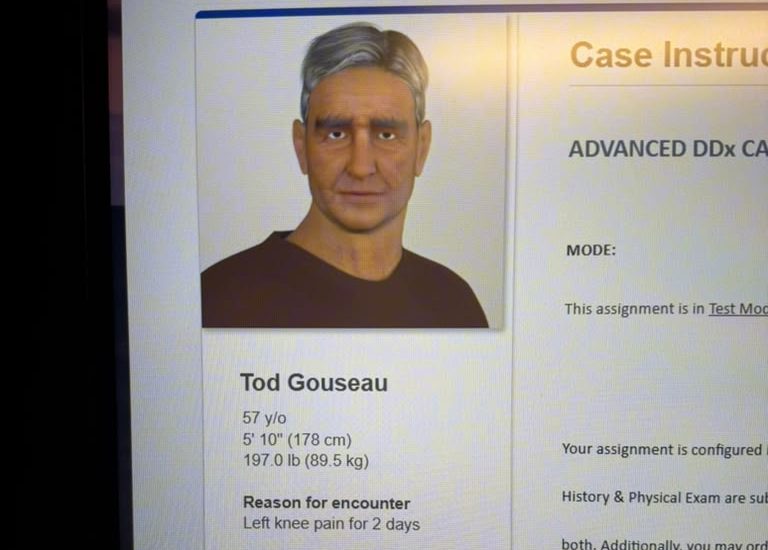
57 y/o
5′ 10″ (178 cm)
197.0 lb (89.5 kg)
Reason for encounter
Acute left knee pain for 2 days
Location
Outpatient clinic with x-ray, ECG, and laboratory capabilities
iHuman Tod Gouseau acute left knee pain answers History Questions
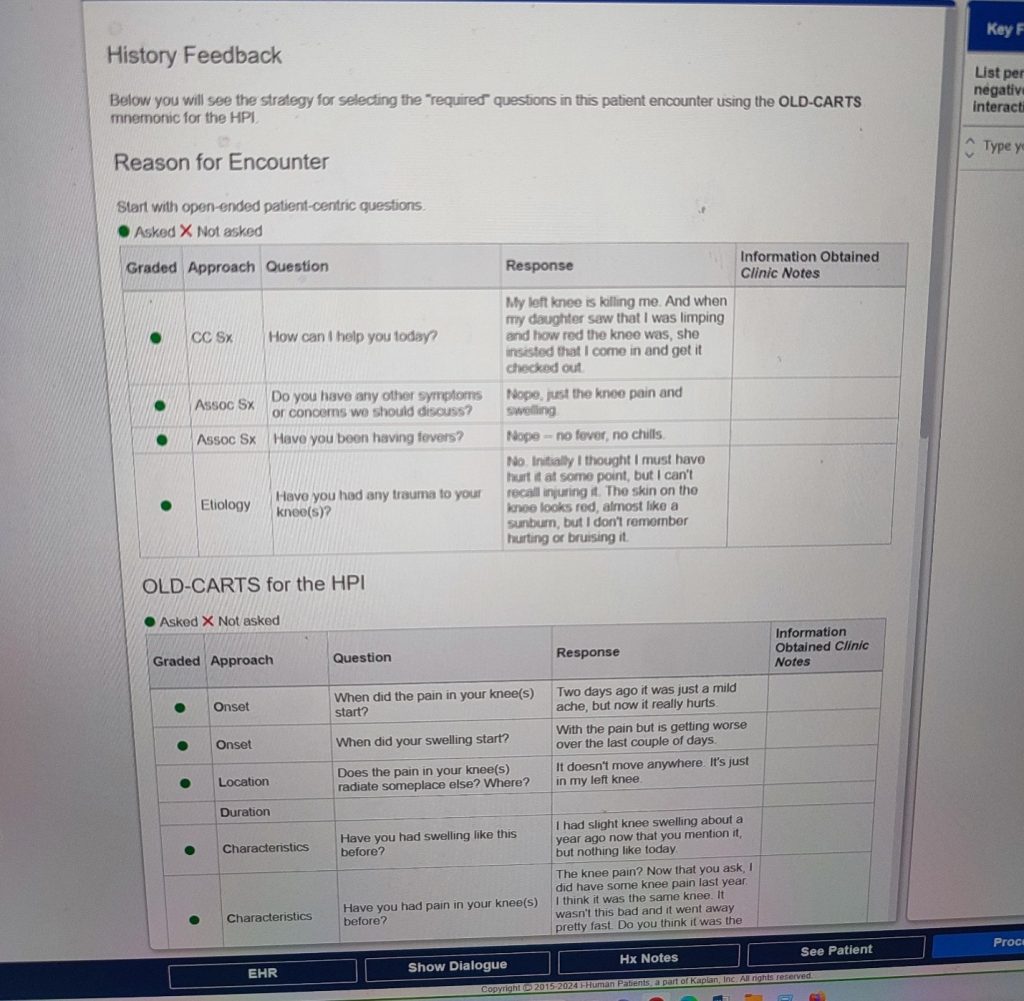
- How can I help you today?
- Do you have any other symptoms or concerns we should discuss?
- How does this affect your life?
- Have you been having fevers?
- Have you had any trauma to your knee(s)?
- Is there any instability in your knee(s)?
- Do you have any pain in your knee(s)?
- Do your knees catch, lock, or pop?
- What are the events surrounding the start of the pain in your knee(s)?
- Does anything make the pain in your knee(s) better or worse?
- ……….
iHuman Tod Gouseau acute left knee pain answers
Physical Exams Required
- Weight
- Height
- cognitive status
- SpO2
- temperature
- blood pressure
- pulse
- respiration
- temperature
- auscultate heart
- auscultate lungs
- assess …….
Navigating the iHuman Case of Tod Gouseau: Acute Left Knee Pain Case Study
Clinical simulation platforms like iHuman offer health professions students an unmatched opportunity to refine diagnostic reasoning, master the history of present illness (HPI), and build comprehensive management plans. However, working through complex patient encounters with vague presentation details can test even the most dedicated learners.
If you are currently working through the case of Tod Gouseau, a 57-year-old male presenting with acute left knee pain for 2 days, you know how critical it is to ask the right history questions, execute targeted physical examination steps, and structure an evidence-based differential.
Whether you need guidance on building a polished EHR note or mastering your clinical reasoning score, exploring specialized study assistance on iHuman Tutor can help streamline your preparation.
Patient Overview: The Case of Tod Gouseau
Tod Gouseau presents to the outpatient clinic with a primary complaint of acute left knee pain for 2 days. What initially began as a minor ache rapidly progressed into severe, constant throbbing pain, making weight-bearing and normal walking nearly impossible.
When evaluating an acute monoarthritis flare, the clinical challenge lies in synthesizing subtle clues across the patient’s past history, lifestyle choices, and objective physical findings. Small details—such as recent medication adjustments, specific dietary changes, or prior self-limiting joint flares—play a massive role in narrowing down your working assessment.
For a deeper look into clinical workflow breakdowns and step-by-step case guidance, visit the iHuman Case Solutions Hub to see how expert tutoring can elevate your performance.
Key History Questions to Consider
To build an accurate HPI and complete a thorough Review of Systems (ROS), your questioning strategy must cover every dimension of the presentation. For Tod Gouseau, utilizing a structured framework like OLDCARTS helps ensure no essential data point is overlooked.
Essential History Areas to Explore:
Onset & Duration: Pinpointing the exact timeframe of symptom progression over the past 48 hours and identifying any previous joint episodes.
Aggravating & Relieving Factors: Evaluating the effect of rest, weight-bearing, and over-the-counter anti-inflammatory trial responses.
Risk Factors & Triggers: Asking targeted questions about recent prescription changes (such as antihypertensives), dietary purine intake, and habitual alcohol consumption.
Pertinent Negatives: Screening for fever, chills, recent trauma, or systemic signs of infection.
Finding the correct balance of questions without over-interviewing can be tough. Check out our detailed guide on Mastering iHuman History Taking Strategies to optimize your question efficiency and boost your performance score.
Targeted Physical Examination Strategy
The physical examination for iHuman Tod Gouseau acute left knee pain answers requires a methodical approach that balances patient comfort with clinical thoroughness. In the case of Tod Gouseau, objective findings reveal crucial markers of joint inflammation alongside extra-articular signs that point toward the underlying etiology.
Priority Physical Exam Components:
Vital Signs & General Impression: Confirming hemodynamic stability and evaluating for systemic toxicity or fever.
Detailed Joint Inspection & Palpation: Assessing for periarticular erythema, localized heat, tenderness along joint lines, and intra-articular effusion tests (such as the bulge or patellar tap test).
Range of Motion & Functional Assessment: Documenting active versus passive ROM limitations, guarding, and gait alterations.
Distal Extremity Inspection: Inspecting other peripheral joints for chronic subcutaneous changes, nodular deposits, or precursor lesions.
To see how top-performing students document physical findings using accurate medical terminology without relying on subjective filler terms, explore the resource options at iHuman Tutor Support.
Formulating the Differential Diagnosis
When a patient presents with sudden-onset, severe joint pain, a broad differential diagnosis must be systematically systematically analyzed. The goal is to separate high-acuity surgical or infectious emergencies from inflammatory crystal-induced arthropathies.
Clinical Considerations for Tod Gouseau:
Crystal Arthropathy (e.g., Gout vs. Pseudogout): Strongly suggested by monoarticular presentation, rapid onset, dietary/medication triggers, and subcutaneous nodal deposits.
Septic Arthritis: Must always remain a primary diagnostic consideration whenever an acutely inflamed joint effusion is encountered, requiring urgent synovial fluid evaluation.
Traumatic / Structural Injury: Lower probability based on historical absence of acute force, locking, or instability, but evaluated during ROM testing.
Cellulitis or Periarticular Infection: Differentiated via careful inspection of skin integrity and joint line localization.
Struggling to organize your differential diagnosis or write a high-scoring problem statement? Learn how to structure your reasoning by visiting iHuman Differential Diagnosis Help.
Structuring an Evidence-Based Management Plan
A complete management plan for acute joint pain spans diagnostic workups, acute pharmacotherapy, chronic maintenance strategies, and patient education. In iHuman scoring, each element of the plan must be justified with strong clinical rationale and evidence-based guidelines.
Core Management Plan Sections:
Diagnostic Workup: Selecting key laboratory markers (inflammatory indicators, metabolic panels, serum urate) and essential procedures (joint aspiration and fluid analysis).
Acute & Chronic Pharmacotherapy: Designing a dual approach featuring short-term anti-inflammatory relief and long-term metabolic control, including proper prescription formatting and drug interactions.
Consultations & Referrals: Identifying appropriate specialist referrals (e.g., Rheumatology, Nutrition) to prevent recurrent flares.
Client Education & Red Flags: Formulating clear patient instructions regarding dietary modifications, medication adherence, and urgent warning signs that necessitate immediate care.
Unlock Complete Answers & Expert Guidance for Tod Gouseau
Navigating the iHuman case of Tod Gouseau requires precise case synthesis, flawless documentation, and expert clinical decision-making. Don’t risk losing points on your case submissions due to missed history questions, incomplete physical exams, or improperly formatted management plans.
At iHuman Tutor, we provide comprehensive, step-by-step case solutions, expert feedback, and clinical documentation support tailored specifically to your nursing and medical simulation coursework.
Ready to score higher on your iHuman assignments? Order Complete Case Answers & Expert Tutoring Solutions Today at iHumanTutor.com!