


11 August 2026
No Comments
iHuman assignment
iHuman Tamika Brayton flank pain answers
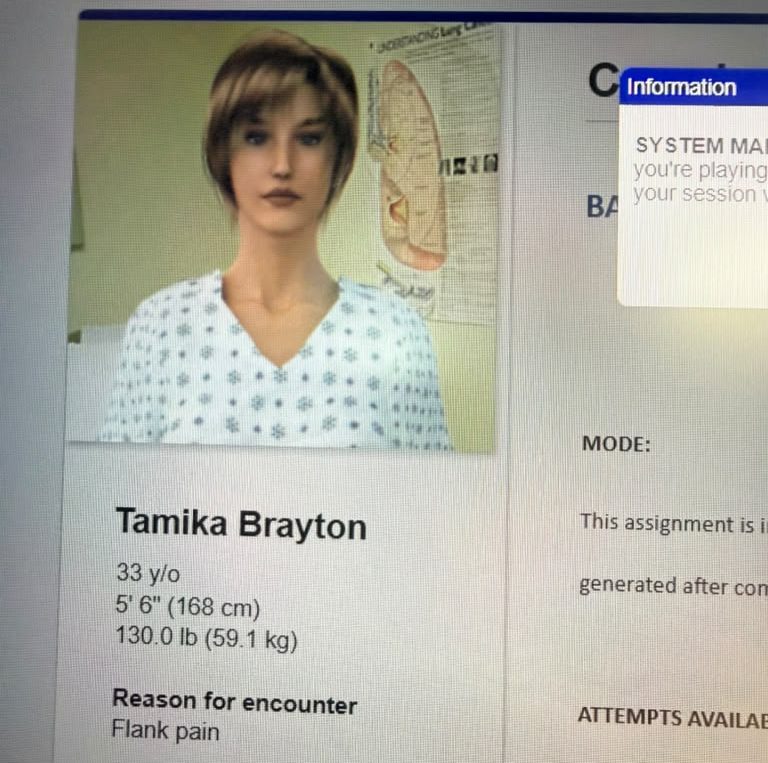
Tamika Brayton
33 y/o
5′ 6″ (168 cm)
130.0 lb (59.1 kg)
Reason for encounter
Flank pain
Location: Outpatient clinic with laboratory capabilities
iHuman Tamika Brayton History Questions
- How can I help you today?
- Do you have any other symptoms or concerns we should discuss?
- Do you have any pain in your flanks?
- When did your flank pain start?
- What are the events surrounding the start of your flank pain?
- Does your flank pain come and go?
- What does your flank pain feel like?
- Where more precisely is your flank pain?
- Does your flank pain radiate someplace else? Where?
- How severe (1-10 scale) is your flank pain?
- Does anything make your flank pain better or worse?
- What treatments…….
iHuman Tamika Brayton flank pain answers
Physical Exams Required
- Weight
- Height
- cognitive status
- SpO2
- temperature
- blood pressure
- pulse
- respiration
- temperature
- auscultate heart
- auscultate lungs
- assess …….
Master the iHuman Case Study: 33-Year-Old Tamika Brayton Presenting with Flank Pain
Navigating complex virtual patient scenarios on platforms like iHuman can be challenging, even for the most dedicated nursing and medical students. Whether you are prepping for clinical assessments or working through weekly SOAP notes, understanding how to systematically evaluate a patient scenario is key to clinical success.
One of the most frequently searched clinical modules involves Tamika Brayton, a 33-year-old female presenting with acute flank pain. Below, we break down an high-level overview of this classic case, explaining how to approach the history questions, physical examination, differential diagnosis, and comprehensive management plan to help you excel in your coursework.
Case Overview: 33-Year-Old Female with Flank Pain
When encountering a virtual patient like Tamika Brayton, the presentation immediately forces clinicians to differentiate between routine lower urinary tract complaints, renal parenchyma involvement, or alternative retroperitoneal and pelvic etiologies.
Patient Demographics & Initial Presentation
Patient: Tamika Brayton
Age: 33 years old
Primary Complaint: Acute flank pain accompanied by systemic and lower urinary tract symptoms.
Clinical Setting: Primary care clinic / Outpatient encounter.
When analyzing this iHuman case, students must focus on how the patient’s acute symptoms interlock with her underlying risk factors, such as a prior history of recurrent infections or recent medication changes.
Key Clinical Steps to Complete the Case
To score high marks on your clinical case evaluations, you must follow a structured, evidence-based process from the moment you open the encounter to the final submission of your plan.
1. Taking a Targeted History
Formulating the right history questions is critical for establishing a narrow and accurate diagnostic focus. You will need to explore the OLDCARTS framework (Onset, Location, Duration, Character, Aggravating factors, Relieving factors, Radiation, Timing, and Severity) to uncover:
The exact character, radiation, and onset of the posterior back/side discomfort.
Associated systemic signs like fevers, chills, nausea, or emesis.
Lower urinary tract symptoms including dysuria, urgency, and changes in voiding patterns.
Pertinent past medical history, past infections, and current medication compliance (such as oral contraceptives).
Need precise guidance on asking high-yield questions? Explore expert solutions and case walkthroughs at iHuman Tutor.
2. Performing a Focused Physical Examination
Your physical examination must be precise and tailored to the patient’s primary complaints. In cases involving flank discomfort, key body system assessments include:
Vitals Evaluation: Checking for hemodynamic stability, elevated temperature, or signs of systemic illness.
Abdominal Examination: Assessing for localized abdominal tenderness, organomegaly, or peritonitis signs.
Costovertebral Angle (CVA) Assessment: Evaluating for unilateral or bilateral costovertebral angle tenderness on percussion, which is a key physical marker for upper urinary tract involvement.
Secondary Systems: Reviewing skin, cardiovascular, and respiratory systems to rule out systemic complications.
3. Building a Robust Differential Diagnosis
Developing a strong differential diagnosis requires balancing the most common condition against potential life-threatening or organ-threatening alternatives. When analyzing a 33-year-old female presenting with flank discomfort, fever, and dysuria, your primary differentials should account for:
Upper Urinary Tract Infections: Conditions involving renal parenchymal inflammation
Renal Calculi: Nephrolithiasis or ureterolithiasis with secondary obstruction or mild infection.
Lower Urinary Tract Infections: Uncomplicated or recurrent cystitis.
Gynecologic & Pelvic Etiologies: Pelvic inflammatory disease (PID) or tubal pathology.
Gastrointestinal Pathology: Retrocecal appendicitis or atypical abdominal causes.
4. Ordering Diagnostic Tests & Formulating the Management Plan
Once your differentials are prioritized, you must select appropriate laboratory and imaging studies to confirm your primary diagnosis. A solid clinical strategy involves:
Ordering key laboratory tests (such as urinalysis, urine culture, CBC, and renal panels).
Determining whether bedside or formal imaging (such as ultrasound or non-contrast CT) is indicated.
Structuring an evidence-based management plan that includes appropriate empiric outpatient antimicrobial coverage, symptom relief, patient education, and specific follow-up/red-flag parameters.
Achieve Top Marks on Your iHuman Assignments
Struggling to hit a 100% score on your iHuman case submission? Unsure of which exact questions yield high scores or how to document your EHR physical findings without losing points?
You don’t have to guess your way through complex virtual patient modules. At iHuman Tutor, we provide step-by-step guidance, expert case breakdowns, and comprehensive clinical resources designed to sharpen your diagnostic skills and ensure top-tier academic performance.
Why Choose iHuman Tutor?
Accurate Case Analysis: Clear breakdowns of complex patient presentations.
Evidence-Based Insights: Stay up-to-date with current guidelines and clinical practices.
Comprehensive Academic Support: Get the clarity you need to complete case logs, HPI writes-ups, and SOAP notes effortlessly.
Don’t let difficult virtual cases hold back your grades. Visit iHuman Tutor today to access expert help and unlock the complete, step-by-step answers and rationale for your clinical assignments!