


15 September 2026
No Comments
iHuman assignment
iHuman Hailey Richardson trouble sleeping answers
Hailey Richardson
Reason for Encounter: trouble sleeping
65 y/o
5’5 (165cm)
126.0lb (57.3kg)
iHuman Hailey Richardson trouble sleeping
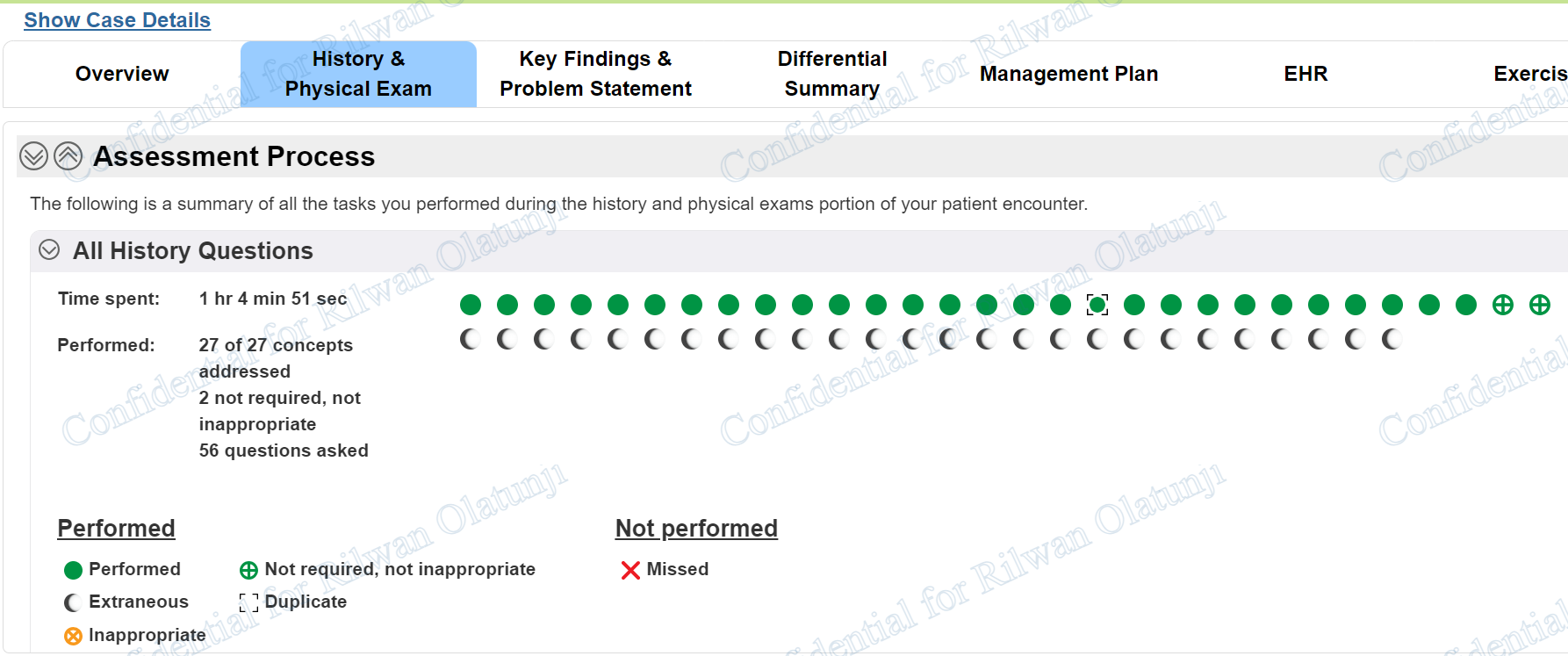
History Questions
- How can I help you today?
- Have you been nervous, anxious, or worried about something?
- Do you awaken frequently from sleep?
- How is your appetite? Any recent change?
- Do you have any other symptoms or concerns we should discuss?
- Why do you wake up?
- Do you nap during the day?
- Is your problem falling asleep or awakening early?
- Do you take anything to help you sleep?
- Does your insomnia come and go?
- If you awaken in the middle of the night, are you able to fall asleep again?
- What do you do when you cannot fall asleep?
- …….
iHuman Hailey Richardson Trouble Sleeping
Physical Exams Required
- Weight
- Height
- cognitive status
- SpO2
- temperature
- blood pressure
- pulse
- respiration
- temperature
- auscultate heart
- auscultate lungs
- assess …….
iHuman Hailey Richardson Case Study: Trouble Sleeping in a 65-Year-Old Patient
The iHuman Hailey Richardson case study presents a 65-year-old female whose primary concern is trouble sleeping. At first glance, insomnia may appear to be a straightforward complaint, but this case requires students to look beyond the presenting symptom and recognize how multiple subjective and objective findings can influence clinical reasoning.
For students completing an iHuman assignment, the Hailey Richardson case provides an opportunity to practice history questions, HPI development, review of systems, physical examination, differential diagnosis, diagnostic reasoning, and management planning. The purpose of this overview is to discuss the clinical reasoning process without providing the exact iHuman answers, questions, examination selections, diagnostic results, or completed management plan.
Hailey Richardson iHuman Case Overview
Hailey Richardson is a 65-year-old woman who presents with trouble sleeping. Her sleep difficulty represents the primary reason for the encounter, but the history suggests that the sleep complaint should not necessarily be approached as an isolated problem.
During the interview, several additional concerns emerge. The patient describes difficulty initiating sleep as well as difficulty returning to sleep after nighttime awakening. She also reports daytime fatigue and a sense of being jittery or nervous. Other associated symptoms provide important clinical clues and demonstrate why comprehensive history-taking is essential in an iHuman simulation.
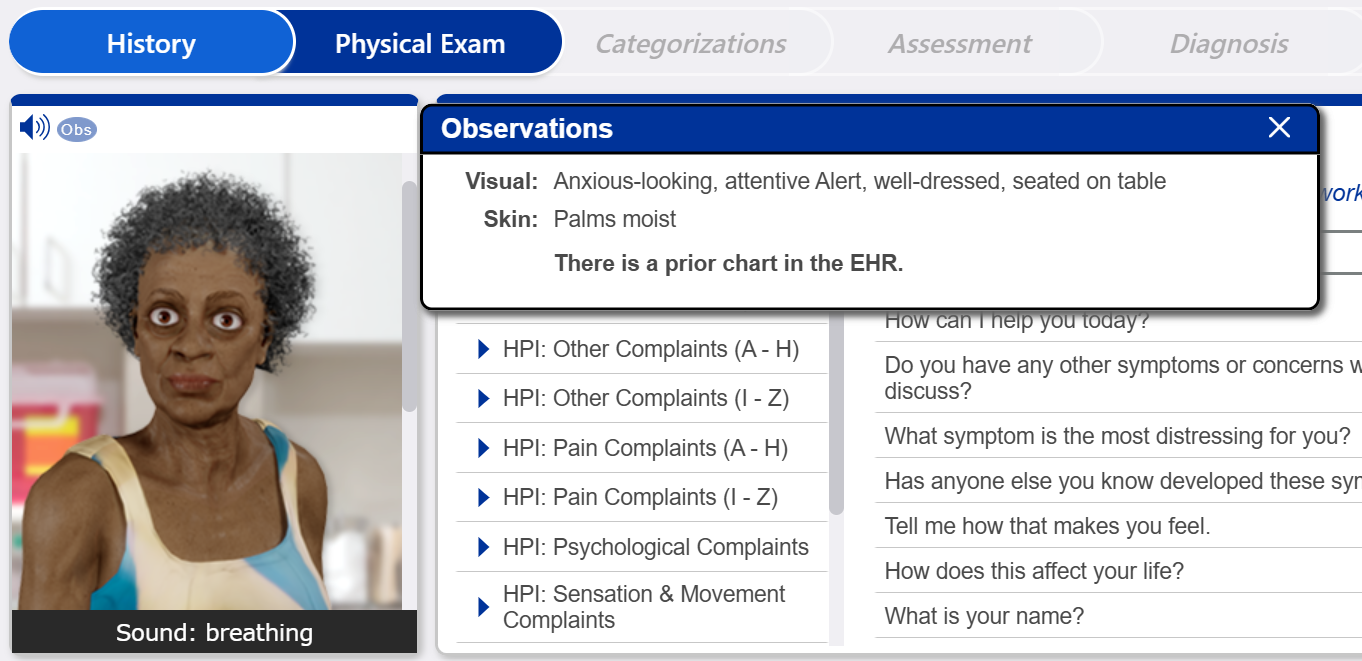
The case also incorporates information from the patient’s previous EHR, allowing students to compare current symptoms with previously documented health information. This is an important component of clinical reasoning because the patient’s medical, preventive, medication, family, and social histories can change how the current presentation is interpreted.
Why the History Questions Matter
One of the most important parts of the iHuman history questions section is recognizing that the chief complaint is only the starting point. A provider must investigate the characteristics, timing, associated symptoms, potential triggers, and functional effects of the presenting problem.
In Hailey Richardson’s case, the sleep complaint is accompanied by symptoms involving several body systems. The patient describes changes in energy, appetite, bowel habits, temperature tolerance, sweating, and intermittent cardiovascular and neurologic symptoms. These findings broaden the clinical picture and demonstrate why a focused but comprehensive history is necessary.
Students should approach the history systematically rather than simply searching for questions that confirm an initial impression. The objective is to gather enough relevant subjective information to establish a meaningful clinical problem representation.
For students looking for additional examples of how iHuman cases connect history-taking with clinical reasoning, the iHuman Hua Zhang chest pain case study provides another example of how a presenting complaint can require a broader assessment.
Connecting the History With the Physical Examination
The physical examination in this case adds another layer to the clinical picture. Rather than treating the examination as a collection of unrelated findings, students should consider how objective findings either support or challenge information obtained during the interview.
The examination includes vital-sign information as well as focused findings involving the neurologic, thyroid, cardiovascular, and integumentary systems. These findings are particularly important because they provide objective information that can be compared with the patient’s subjective reports.
This is an important iHuman skill. A strong clinical assessment does not simply list every finding obtained during the encounter. Instead, the provider identifies the findings that are clinically meaningful and considers how they relate to the patient’s presenting concern.
Clinical Reasoning and Differential Diagnosis
Developing the differential diagnosis is one of the more challenging components of the Hailey Richardson case. Trouble sleeping can result from numerous causes, including primary sleep disorders, psychological factors, medication effects, lifestyle factors, and systemic medical conditions.
The presence of additional symptoms means that the provider must consider a broader range of possibilities. The combination of sleep disturbance with changes involving cardiovascular, neurologic, gastrointestinal, and endocrine systems makes it important to evaluate potential systemic contributors rather than automatically labeling the presentation as uncomplicated insomnia.
The key learning point is that a differential diagnosis should be based on the totality of the history and examination. Students should be able to explain why particular possibilities deserve consideration and why other conditions become less likely as additional information is obtained.
Diagnostic Reasoning and the Management Plan
The diagnostic portion of the case requires students to understand why specific investigations may be appropriate based on the clinical presentation. Diagnostic testing should answer a clinical question rather than simply generate a long list of laboratory studies.
Similarly, the management plan should follow logically from the assessment. Depending on the final clinical interpretation, management may involve pharmacologic therapy, symptom control, additional evaluation, referrals, patient education, monitoring, and follow-up.
A strong iHuman management plan connects each intervention with the patient’s specific findings and provides a clear rationale. It should also address safety considerations and appropriate follow-up rather than focusing exclusively on medication selection.
Students working through other complex iHuman cases can review the iHuman Margaret Wilson shortness-of-breath case overview to see how history, examination, clinical reasoning, and management considerations can be connected within a single case.
What Makes the Hailey Richardson Case Challenging?
The Hailey Richardson case is challenging because the presenting complaint can initially direct attention toward sleep management alone. However, the patient’s additional symptoms encourage a more comprehensive clinical assessment.
The case therefore tests several competencies simultaneously:
Recognizing important information within the patient’s history
Organizing the HPI using a structured approach such as OLDCARTS
Identifying pertinent positive and negative findings
Connecting subjective complaints with objective examination findings
Constructing an appropriate differential diagnosis
Determining which diagnostic investigations are clinically relevant
Developing an evidence-based management strategy
Documenting the encounter clearly and professionally
These competencies reflect the broader structure of many iHuman assignments, which evaluate history-taking, physical assessment, clinical reasoning, differential diagnosis, and management planning rather than a single isolated answer. (NursingProxy)
Get Comprehensive Hailey Richardson iHuman Answers
Students completing the Hailey Richardson iHuman case study may find that the most difficult part is keeping every section of the encounter connected. The history questions should support the HPI, the physical examination should complement the history, the differential diagnosis should be based on the combined findings, and the management plan should logically follow the clinical assessment.
This case overview intentionally does not provide the definitive history questions, physical examination selections, differential diagnosis, diagnostic tests, or exact answers. A comprehensive case resource can provide the structured information needed to review each section while helping students understand the clinical reasoning behind the documentation.
iHumanTutor – iHuman Assignment Help and Resources provides support for iHuman history questions, physical examinations, diagnostic reasoning, differential diagnoses, and management plans. (iHuman Assignment Help & Tutor)
Need the Complete Hailey Richardson Case?
If the goal is to review the Hailey Richardson iHuman answers, including the history-taking process, HPI, physical examination documentation, differential diagnosis reasoning, diagnostic workup, and evidence-based management plan, comprehensive case assistance can help organize the entire encounter into one consistent clinical framework.