


8 October 2026
No Comments
iHuman assignment
iHuman Bebe Babbitt more frequent severe headaches answers
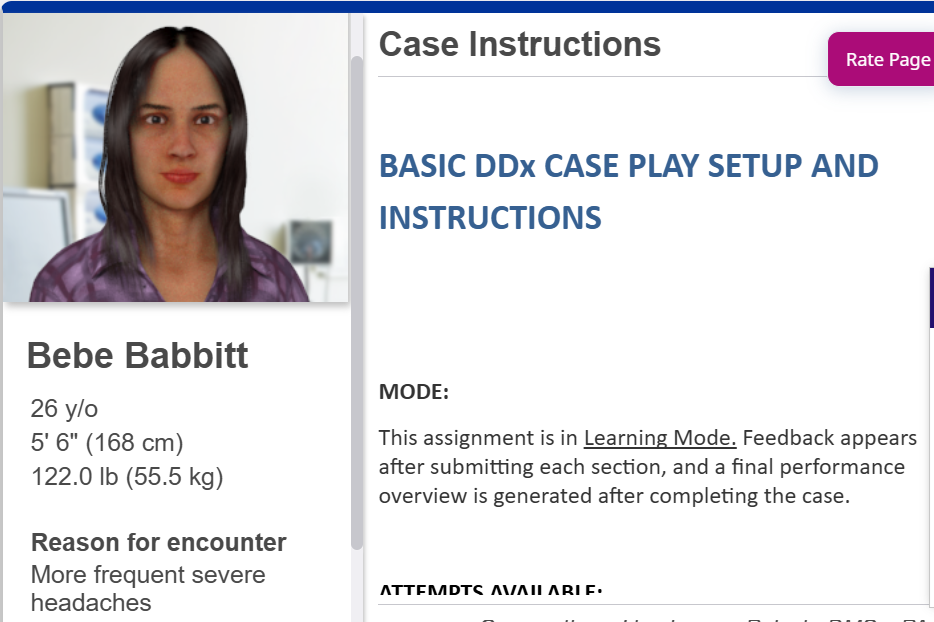
26 y/o
5′ 6″ (168 cm)
122.0 lb (55.5 kg)
Reason for encounter
More frequent severe headaches
Location
Outpatient clinic with x-ray, ECG, and laboratory capabilities
History Questions
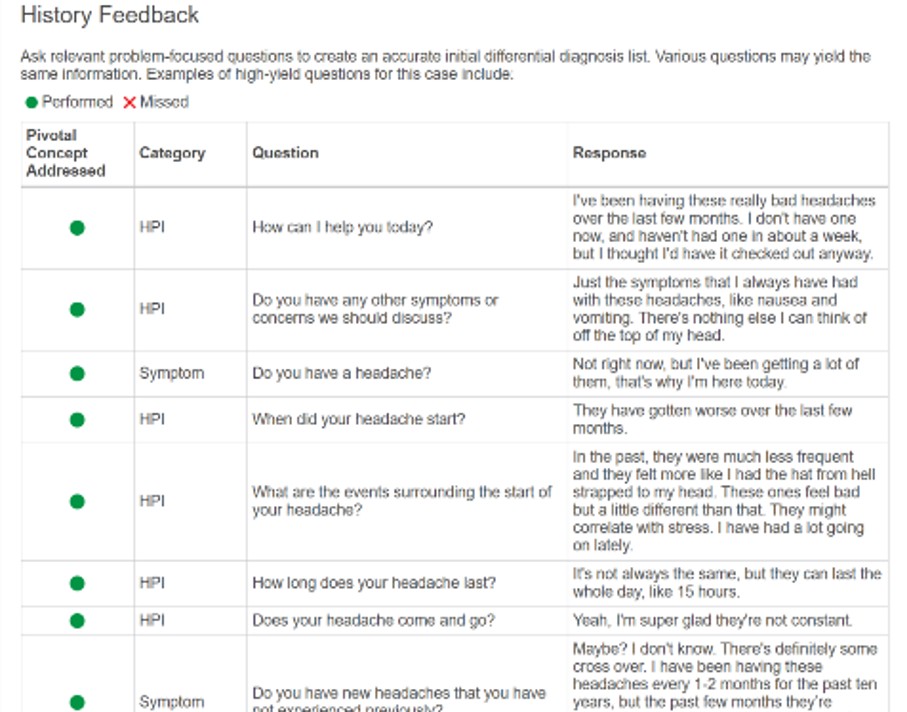
- How can I help you today?
- Do you have any other symptoms or concerns we should discuss?
- Tell me how does that makes you feel?
- How does this affect your life?
- Is there any thing I can do for you right now?
- Do you have a headache?
- When did your headache start?
- How long does your headache last?
- Does your headache come and go?
- Have you been having fevers?
- ……….
Physical Exams Required
- Weight
- Height
- cognitive status
- SpO2
- temperature
- blood pressure
- pulse
- respiration
- assess stance & gait
- …………….
Get all the complete Bebe Babbitt Kathleen Parks case with history questions, physical exam, complete EHR documentation, exercises, case findings, diagnosis, test results, and management plan.
iHuman Bebe Babbitt Case Study: More Frequent Severe Headaches
The iHuman Bebe Babbitt case is a clinical simulation centered on a 26-year-old patient presenting with more frequent severe headaches. This case provides an opportunity for nursing and advanced practice students to practice clinical reasoning, focused history-taking, physical examination, documentation, differential diagnosis, and development of a patient-centered management plan.
For students completing the iHuman assignment, the challenge is not simply recognizing that the patient has a headache. The encounter requires careful interpretation of subjective and objective information and appropriate clinical decision-making throughout the virtual patient experience.
This article provides an overview of the case without revealing the definitive history questions, physical examination selections, diagnostic tests, differential diagnosis, or exact management answers. Students seeking comprehensive case assistance can explore iHuman Tutor for additional resources.
Bebe Babbitt: Patient Presentation
Bebe Babbitt is a 26-year-old patient whose reason for encounter is more frequent severe headaches. The case involves a longstanding history of recurrent headaches with a more recent change in the frequency and severity of episodes.
The clinical history contains several important clues that require careful evaluation. The headache episodes are associated with additional symptoms and have identifiable circumstances that may influence their occurrence. The patient’s history also contains information that helps distinguish a recurring primary headache pattern from potentially concerning secondary causes.
The Bebe Babbitt case is therefore particularly useful for students learning how to organize a headache evaluation rather than focusing exclusively on the presenting complaint.
Bebe Babbitt More Frequent Severe Headaches iHuman Case
Why the History Questions Matter
The history questions are a major part of the iHuman encounter. A thorough headache assessment requires more than asking whether the patient has pain. Students need to understand the characteristics, chronology, associated symptoms, precipitating circumstances, relieving factors, and functional effects of the complaint.
For Bebe Babbitt, the historical information establishes that the headache problem is not entirely new. However, the recent change in the patient’s pattern makes the clinical assessment more significant.
Lifestyle and environmental factors also contribute to the clinical picture. Diet, sleep, stress, and other individual circumstances can influence recurrent headache disorders. Understanding these relationships allows students to develop a more complete picture of the patient’s experience.
The objective is to use the interview to construct a clinically coherent history of present illness, rather than simply collecting isolated responses.
Physical Examination in the Bebe Babbitt Case
The physical examination is another essential component of this iHuman case. Headache evaluation requires attention to general appearance, vital signs, neurologic status, and other relevant body systems.
The patient’s objective findings provide important context for interpreting the subjective history. A focused assessment can help identify findings that support a primary headache disorder while also helping clinicians recognize findings that could indicate a more serious underlying condition.
Students should approach the physical examination systematically and document findings using appropriate clinical terminology. The iHuman encounter also emphasizes the difference between subjective information obtained from the patient and objective information obtained through examination.
Understanding this distinction becomes particularly important when completing the EHR documentation portion of the assignment.
Building the Clinical Differential Diagnosis
Developing a differential diagnosis is one of the most important reasoning steps in the Bebe Babbitt case.
Recurrent severe headaches can have multiple possible explanations. Clinical reasoning requires the provider to consider the overall symptom pattern, associated manifestations, time course, risk factors, and physical examination findings.
Students should avoid anchoring on one symptom. Instead, they should evaluate the complete presentation and consider both common primary headache disorders and potentially serious secondary causes.
The purpose of a differential diagnosis is not merely to create a long list. A strong clinical differential prioritizes conditions according to how well they explain the presentation and how important they are to recognize or exclude.
This makes the Bebe Babbitt encounter a valuable exercise in diagnostic prioritization and clinical judgment.
Diagnostic Evaluation and Clinical Reasoning
The diagnostic portion of the iHuman encounter requires students to determine whether additional evaluation is appropriate based on the information collected.
For headache presentations, the decision to pursue diagnostic testing depends on factors such as the patient’s history, changes in headache characteristics, examination findings, and the presence or absence of concerning features.
Students should understand that diagnostic testing should have a clinical purpose. Testing should not be ordered simply because a patient reports severe pain. Instead, the decision should be connected to the probability of alternative diagnoses and the potential consequences of missing a serious condition.
The Bebe Babbitt case therefore reinforces the importance of evidence-based diagnostic reasoning.
Developing the Management Plan
The management plan is the final major component of the clinical reasoning process. A comprehensive plan should address the patient’s immediate symptoms while also considering prevention, lifestyle factors, education, monitoring, and follow-up.
For a patient experiencing recurrent severe headaches, management may involve several categories of intervention. These can include symptom-directed treatment, supportive measures, identification of triggers, monitoring of headache frequency, and reassessment when symptoms change.
The management plan should also explain why each intervention is appropriate. Simply listing medications or recommendations is not sufficient for a strong clinical submission. The rationale should connect the intervention to the patient’s presentation and clinical needs.
Students should also consider when referral, additional evaluation, or earlier reassessment might become appropriate.
Patient Education and Follow-Up
Patient education is an important part of the Bebe Babbitt case because recurrent headache management extends beyond medication.
Education may involve helping the patient recognize patterns, maintain consistent lifestyle habits, identify potential triggers, use medications appropriately, and recognize symptoms that require prompt medical attention.
Follow-up is equally important. The patient’s response to treatment, headache frequency, severity, functional limitations, and development of new symptoms should influence subsequent clinical decisions.
These elements demonstrate the difference between a medication-centered approach and a comprehensive patient-centered management plan.
Why Bebe Babbitt Is a Valuable iHuman Case
The iHuman Bebe Babbitt case brings together several skills commonly required in advanced health assessment and primary care coursework. Students must move from the initial complaint of more frequent severe headaches through structured history-taking, objective assessment, clinical reasoning, and treatment planning.
The case is particularly useful because it demonstrates how seemingly familiar complaints can require careful assessment when their frequency or severity changes.
For students searching for Bebe Babbitt case answers, it is important to understand that completing the encounter successfully involves more than identifying a diagnosis. The quality of the history, physical examination, EHR documentation, differential diagnosis, diagnostic reasoning, and management plan all contribute to the overall clinical picture.
Need Comprehensive Bebe Babbitt Case Answers?
If you are currently completing the Bebe Babbitt 26-year-old more frequent severe headaches iHuman case, working through each section individually can be time-consuming. A comprehensive resource can help organize the case and provide guidance across the different stages of the virtual patient encounter.
iHuman Tutor – Case Study Assistance offers resources covering iHuman assignments, including history questions, physical examination, EHR documentation, differential diagnosis, and management plan support. (ihumantutor.com)
For students specifically working on the Bebe Babbitt encounter, the dedicated Bebe Babbitt iHuman case resource can be used to obtain more comprehensive case assistance. (ihumantutor.com)
SEO keywords: iHuman, Bebe Babbitt, More frequent severe headaches, 26 year old, iHuman case answers, history questions, physical examination, differential diagnosis, management plan, Bebe Babbitt case study, iHuman headache case, iHuman assignment help.