


10 August 2026
No Comments
iHuman assignment
iHuman Kathleen Parks more frequent severe headaches answers
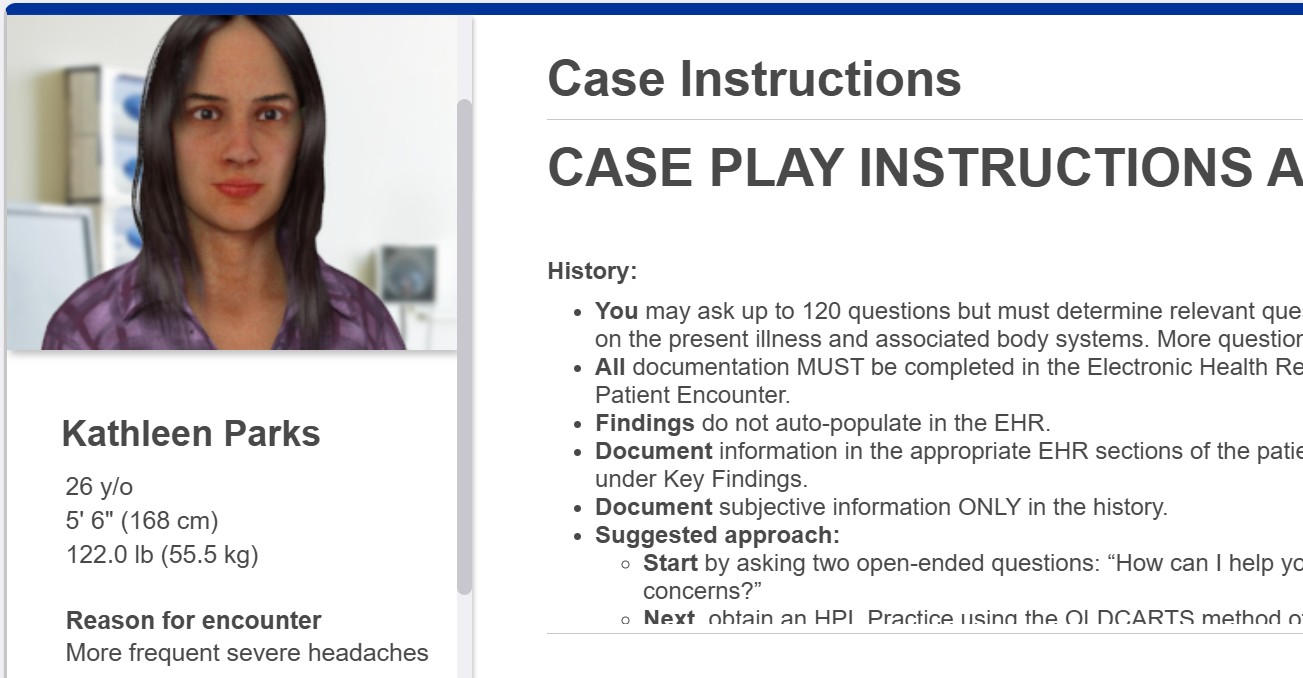
26 y/o
5′ 6″ (168 cm)
122.0 lb (55.5 kg)
Reason for encounter
More frequent severe headaches
Location
Outpatient clinic with x-ray, ECG, and laboratory capabilities
History Questions
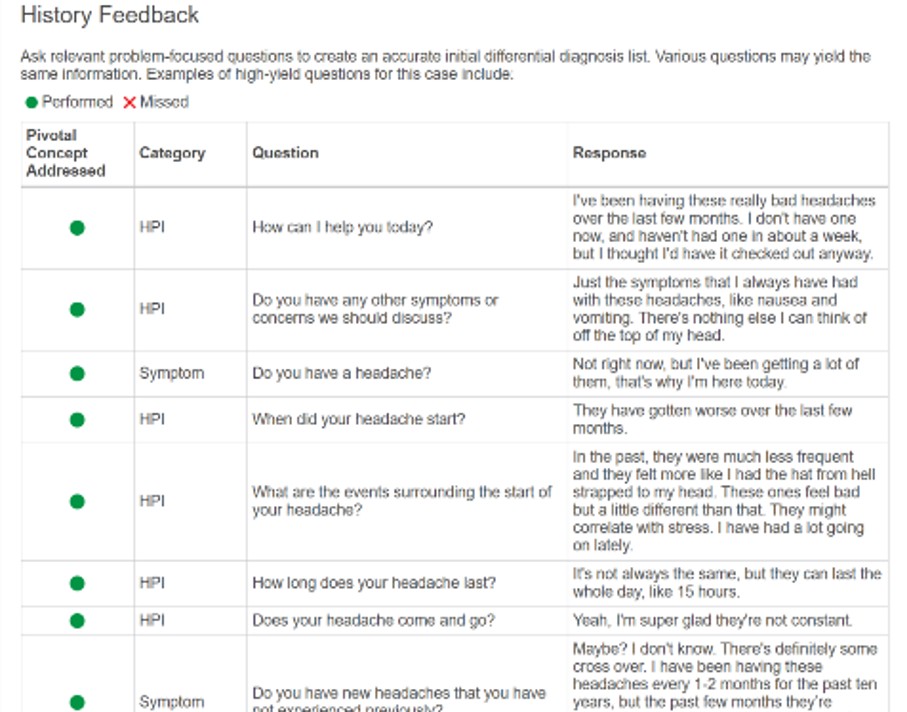
- How can I help you today?
- Do you have any other symptoms or concerns we should discuss?
- Tell me how does that makes you feel?
- How does this affect your life?
- Is there any thing I can do for you right now?
- Do you have a headache?
- When did your headache start?
- How long does your headache last?
- Does your headache come and go?
- Have you been having fevers?
- ……….
Physical Exams Required
- Weight
- Height
- cognitive status
- SpO2
- temperature
- blood pressure
- pulse
- respiration
- assess stance & gait
- …………….
Get all the complete Bebe Babbitt Kathleen Parks case with history questions, physical exam, complete EHR documentation, exercises, case findings, diagnosis, test results, and management plan.
iHuman Kathleen Parks Case Study: More Frequent Severe Headaches — Clinical Overview
The iHuman Kathleen Parks case presents a 26-year-old patient seeking evaluation for more frequent severe headaches. For students completing an iHuman virtual patient encounter, this type of case requires careful clinical reasoning rather than simply identifying a headache pattern. The encounter involves integrating the patient’s subjective history, objective physical examination findings, clinical documentation, differential diagnosis, and an appropriate management plan.
This overview discusses the major clinical concepts without providing the definitive history questions, physical examination selections, diagnostic testing, differential diagnosis answers, or management answers required for completing the simulation. Students looking for comprehensive assistance can explore the iHuman Tutor website for additional iHuman case-study support.
Kathleen Parks iHuman Case: Patient Presentation
Kathleen Parks is a 26-year-old female presenting with the chief complaint of more frequent severe headaches. The case describes a longstanding headache history that has become more frequent and severe in recent months.
The patient’s presentation includes several clinically important characteristics that help guide the evaluation. The headaches have been present for many years and have a recurring pattern. Episodes can become incapacitating and are associated with multiple symptoms involving the gastrointestinal and sensory systems.
A particularly important component of the case is the presence of visual symptoms associated with the headache episodes. The patient’s history also describes sensitivity to environmental stimuli and gastrointestinal symptoms during attacks. Together, these features make the case an excellent exercise in distinguishing primary headache disorders from other possible causes of recurrent headache.
For students seeking the case-specific resource, the Kathleen Parks iHuman case-study page provides additional information about the case and available comprehensive assistance. (iHuman Tutor)
Understanding the History of Present Illness
The history of present illness is one of the most important components of this iHuman encounter. A structured approach helps organize the patient’s symptoms according to onset, location, duration, characteristics, aggravating and relieving factors, radiation, timing, and severity.
For Kathleen Parks, the clinician must pay attention to the long duration of the underlying headache history while also recognizing the more recent change in frequency and severity. The distinction between a longstanding recurrent condition and a new headache disorder is clinically significant.
The history also provides information about potential triggers. Dietary exposures, lifestyle factors, sleep patterns, and psychosocial stressors can all be relevant when evaluating recurrent headaches. A detailed history allows the clinician to identify patterns without prematurely assuming that every reported exposure is causative.
Physical Examination and Objective Assessment
The physical examination provides another important component of the iHuman case. Students should understand that objective findings must be documented separately from subjective symptoms reported by the patient.
The case includes stable vital signs and a reassuring neurologic assessment. These findings are important because headache evaluation requires attention to potentially concerning neurologic or systemic features.
A focused examination should be interpreted in the context of the patient’s presenting complaint. Findings involving the head, eyes, neurologic system, neck, cardiovascular system, and other relevant systems can contribute to clinical reasoning.
The goal is not simply to document that an examination was performed. Instead, students should understand how objective findings support or challenge potential diagnostic considerations.
Clinical Reasoning and Differential Diagnosis
Developing a differential diagnosis is an essential component of the Kathleen Parks iHuman case. Recurrent headaches have numerous potential causes, and clinical reasoning requires consideration of both primary and secondary headache disorders.
The patient’s longstanding symptom pattern, associated symptoms, reported triggers, visual phenomena, and physical examination findings must be considered together. At the same time, clinicians should remain alert for features that could suggest a secondary cause.
This case therefore provides an opportunity to practice prioritizing diagnostic possibilities according to the patient’s overall presentation rather than selecting diagnoses based on a single symptom.
Students should also distinguish between the most likely clinical explanation and conditions that may require exclusion because of their potential seriousness.
Developing the Management Plan
The management plan represents another major component of the iHuman assignment. A comprehensive plan should connect the clinical assessment to appropriate interventions while considering the patient’s symptom burden and functional impact.
Management considerations can include acute symptom management, lifestyle measures, monitoring of headache patterns, patient education, and appropriate follow-up. The rationale for each intervention is important because iHuman assignments frequently evaluate whether the proposed plan is clinically appropriate rather than simply whether an intervention was listed.
Students should also consider how treatment effectiveness would be evaluated over time and what changes in symptoms would warrant reassessment.
Why This Case Is Valuable for iHuman Practice
The Kathleen Parks case demonstrates why successful iHuman performance requires more than memorizing isolated case answers. Students must connect history questions, subjective findings, physical examination, clinical reasoning, documentation, and the eventual management plan into one coherent clinical assessment.
The broader iHuman case-study resources cover similar components across different virtual patient encounters, including history-taking, physical examination, EHR documentation, differential diagnosis, and management planning. (iHuman Tutor)
Get Comprehensive Kathleen Parks iHuman Case Assistance
If you are working through the Kathleen Parks 26-year-old more frequent severe headaches case, reviewing the clinical concepts is useful, but completing every required component can still be time-consuming. A comprehensive case resource can help you work through the documentation and clinical reasoning requirements while keeping the case organized.
For students who need assistance with the complete encounter—including the case-specific history questions, physical examination, EHR documentation, differential diagnosis, and management plan—visit iHuman Tutor to explore available case-study support.