


2 August 2026
No Comments
iHuman assignment
iHuman Sheila Davis dizziness 68 year old answers
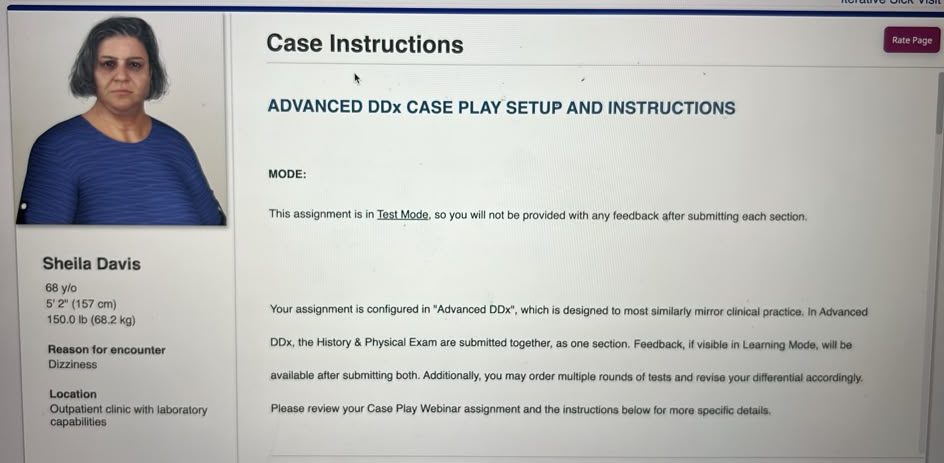
68 y/o
5′ 2″ (157 cm)
150.0 lb (68.2 kg)
Reason for encounter
Dizziness
Location
Outpatient clinic with x-ray, ECG, and laboratory capabilities
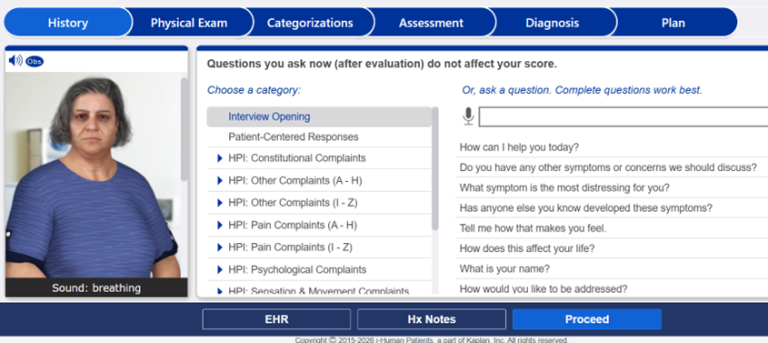
iHuman Sheila Davis dizziness 68 year old answers History Questions
- How can I help you today? – I have been having recurrent sudden, brief episodes of dizziness for the past 2 weeks
- Do you have any other symptoms or concerns we should discuss? – just my dizzy episodes
- Do you have a dizziness problem? – Yes. I’ve had recurrent short episodes of dizziness for the past 2 weeks
- When did your dizziness start? – It started about 2 weeks ago
- What are the events surrounding the start of your dizziness? – When I change my head position, such as when I roll over onto my right side while in bed, it feels like I am spinning around, like the room starts moving around in circles. It also made me want to throw up. But I did not actually vomit
- Tell me about the last time you felt dizzy – Just last night, I had two episodes and could not get back to sleep afterward due to the dizziness.
- Does anything make your dizziness better or worse? – Yes, it is triggered by some changes in my head position. It is quite severe when I turn my head abruptly. The only thing that makes it better is when I hold my head still
- Have you fallen? – Nope
- ……..
iHuman Sheila Davis dizziness 68 year old answers Physical Exams Required
- Weight
- Height
- cognitive status
- SpO2
- temperature
- blood pressure
- pulse
- respiration
- temperature
- auscultate heart
- auscultate lungs
- …….
iHuman Sheila Davis Dizziness (68-Year-Old) Case Study: History, Physical Examination, Differential Diagnosis, and Management Plan Overview
If you’re working through the iHuman Sheila Davis dizziness 68-year-old case, you already know that dizziness can be one of the most challenging chief complaints to evaluate. Unlike straightforward complaints such as sore throat or ankle pain, dizziness requires a systematic assessment to distinguish between vestibular, neurological, cardiovascular, and metabolic causes.
This virtual patient is designed to test your ability to obtain a focused history, perform the appropriate physical examination, interpret diagnostic studies, and develop an evidence-based management plan. Success depends on recognizing key clinical clues while avoiding unnecessary testing.
If you’re looking for the complete iHuman Sheila Davis answers, including comprehensive history questions, physical examination findings, differential diagnoses, diagnostic reasoning, and management plan, visit the full case guide here:
👉 https://ihumantutor.com/ihuman-sheila-davis-dizziness-68-year-old-answers/
You can also explore hundreds of additional virtual patient guides at:
Understanding the iHuman Sheila Davis Dizziness Case
The Sheila Davis scenario presents a 68-year-old woman seeking evaluation for episodes of dizziness that have become increasingly concerning. While dizziness is extremely common among older adults, the underlying causes vary significantly in urgency and management.
The case challenges students to determine whether the symptoms originate from:
Peripheral vestibular disease
Central neurological disorders
Cardiovascular conditions
Medication effects
Metabolic abnormalities
Other systemic illnesses
Rather than jumping to conclusions, learners must build an appropriate differential diagnosis using information gathered during the interview and physical examination.
Why This iHuman Case Is Challenging
Many healthcare students struggle with dizziness because multiple disorders present with overlapping symptoms.
The Sheila Davis case emphasizes clinical reasoning rather than memorization. Students are expected to distinguish subtle differences in symptom patterns while deciding which examination maneuvers and diagnostic tests are clinically appropriate.
Throughout the encounter, every question asked during the interview helps narrow the differential diagnosis.
This makes obtaining a focused history just as important as interpreting the physical examination.
History Questions Drive the Diagnosis
One of the most important objectives of this iHuman case is learning how targeted history questions influence diagnostic thinking.
Rather than asking random questions, students must investigate:
Characteristics of the dizziness
Symptom onset
Duration
Triggering factors
Associated symptoms
Neurologic complaints
Hearing-related symptoms
Medical history
Medication use
Functional limitations
Fall risk
The correct sequence of questioning allows students to recognize important clinical patterns while excluding potentially dangerous causes.
The complete list of optimized history questions and ideal patient responses is available in the comprehensive guide:
https://ihumantutor.com/ihuman-sheila-davis-dizziness-68-year-old-answers/
Physical Examination Is More Than Routine Documentation
Another learning objective involves selecting and interpreting the most appropriate physical examination components.
The virtual encounter encourages students to perform a focused assessment instead of relying solely on routine examinations.
Important systems commonly evaluated include:
General assessment
HEENT examination
Neurological examination
Cardiovascular assessment
Gait evaluation
Vestibular testing
Orthostatic vital signs
Students also learn how bedside examination findings contribute to narrowing the differential diagnosis before laboratory testing or imaging is considered.
Understanding why each examination maneuver is performed is often more important than simply documenting the result.
Diagnostic Testing Requires Clinical Judgment
One of the strengths of the Sheila Davis iHuman case is teaching students that not every patient with dizziness requires extensive diagnostic testing.
Learners are expected to determine when laboratory studies, cardiac evaluation, or neuroimaging may be appropriate based on the patient’s presentation.
The case reinforces evidence-based decision-making by encouraging students to balance diagnostic accuracy with avoidance of unnecessary investigations.
Proper interpretation of available results is equally important when constructing the final assessment.
Developing an Appropriate Differential Diagnosis
Dizziness has an extensive differential diagnosis, making this case an excellent exercise in clinical reasoning.
Students are challenged to compare multiple possible etiologies before identifying the most likely diagnosis.
Potential diagnostic categories may include:
Peripheral vestibular disorders
Central nervous system disorders
Cardiovascular causes
Medication-related dizziness
Metabolic abnormalities
Other neurologic conditions
Rather than focusing only on the final diagnosis, the exercise emphasizes explaining why alternative conditions become more or less likely as additional information is collected.
Our comprehensive solution explains the diagnostic reasoning process step by step without leaving gaps.
Evidence-Based Management Plan
After completing the assessment, students must formulate an evidence-based management plan.
A high-quality management plan typically addresses:
Appropriate treatment recommendations
Patient education
Medication considerations
Follow-up planning
Safety counseling
Indications for referral
Monitoring for symptom progression
The iHuman grading rubric evaluates not only the diagnosis but also whether the proposed treatment aligns with current clinical practice guidelines.
The full management plan available on iHuman Tutor includes detailed explanations, clinical rationale, and APA-referenced evidence to support each intervention.
Why Students Choose iHuman Tutor
Many students find virtual patient encounters time-consuming because they require integrating history, physical examination, diagnostics, assessment, and management into one comprehensive submission.
At iHuman Tutor, every case solution is designed to help students understand the clinical reasoning process—not simply memorize answers.
Each guide typically includes:
Complete history interview guidance
Comprehensive physical examination documentation
Differential diagnosis discussion
Evidence-based assessment
Management plan
SOAP note examples
APA 7 references
Clinical rationale for every decision
This approach helps students improve both their assignment scores and their real-world clinical reasoning skills.
Get the Complete iHuman Sheila Davis Answers
If you’re searching for:
iHuman Sheila Davis answers
Sheila Davis dizziness case
iHuman dizziness 68 year old answers
Sheila Davis history questions
Physical examination overview
Differential diagnosis guidance
Management plan explanation
the complete resource provides comprehensive support while helping you understand the reasoning behind every clinical decision.
Read the full case guide here:
👉 https://ihumantutor.com/ihuman-sheila-davis-dizziness-68-year-old-answers/
You can also browse hundreds of additional iHuman case solutions covering primary care, pediatrics, women’s health, emergency medicine, and psychiatry at:
Whether you’re preparing for an assignment, strengthening your diagnostic reasoning, or reviewing clinical decision-making before an exam, these resources are designed to help you navigate virtual patient encounters with greater confidence and efficiency.