


25 July 2026
No Comments
iHuman assignment
iHuman Jenna James Amanda Wheaton 23 year old Sore throat answers
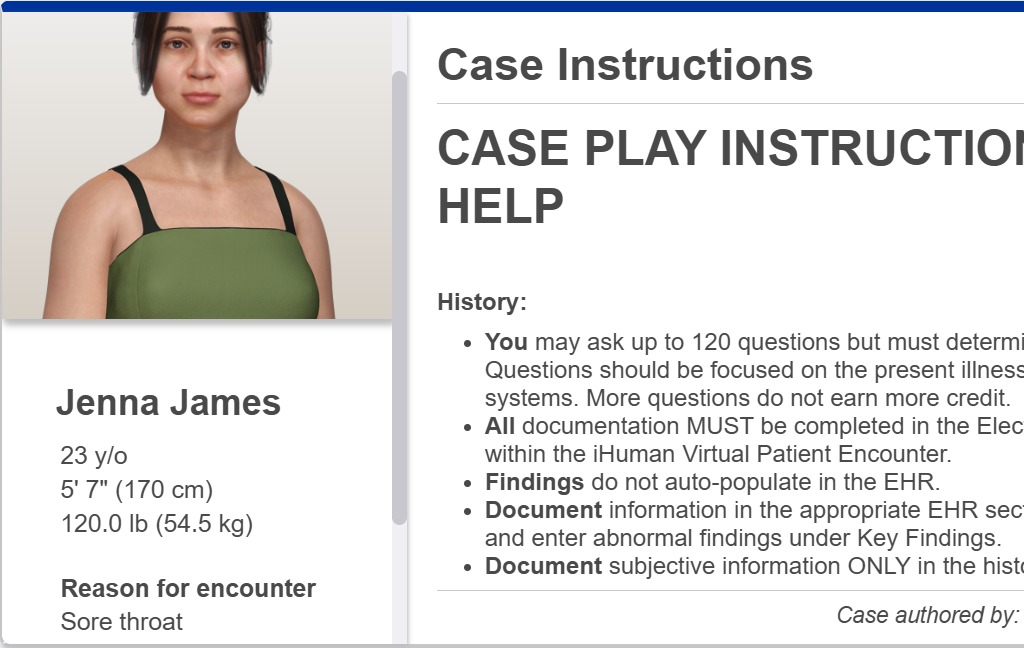
Jenna James Amanda Wheaton
23 y/o
5′ 7″ (170 cm)
120.0 lb (54.5 kg)
Reason for encounter
Sore throat
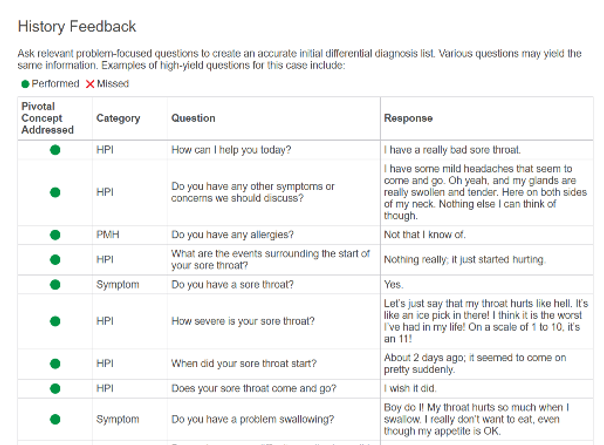
iHuman Jenna James Amanda Wheaton 23 year old Sore throat answers history questions
- How can I help you today?
- Do you have any other symptoms or concerns we should discuss?
- Do you have any allergies?
- What are the events surrounding the start of your sore throat?
- Do you have a sore throat?
- How severe is your sore throat?
- When did your sore throat start?
- Does your sore throat come and go?
- Do you…..
iHuman Jenna James Amanda Wheaton 23 year old Sore throat answers physical exams required
- Weight
- Height
- cognitive status
- SpO2
- temperature
- blood pressure
- pulse
- respiration
- temperature
- auscultate heart
- auscultate lungs
- assess …….
Complete Guide to the iHuman Jenna James Amanda Wheaton Case: Navigating Sore Throat Simulations
Mastering clinical simulation platforms like iHuman is an essential milestone for nursing and medical students honing their advanced health assessment skills. Among the most widely assigned virtual patient encounters in advanced physical assessment courses is the iHuman Jenna James Amanda Wheaton scenario. This complex case challenges students to systematically evaluate a 23 year old patient presenting with an acute sore throat, taking them through history taking, physical exam techniques, building a differential diagnosis, and crafting a comprehensive management plan.
Patient Overview and Clinical Presentation
When approaching virtual clinical encounters, laying a solid foundation starts with analyzing the baseline patient profile. In this simulation, the patient—Jenna James Amanda Wheaton—is a 23 year old student presenting with a primary chief complaint of a severe, acute sore throat accompanied by fever and swallowing discomfort (odynophagia).
Residing in a shared living environment, the patient reports continuous pharyngeal pain that markedly interferes with daily activities and oral intake. Understanding the social context, lifestyle stressors, and acute onset timing helps students tailor their subsequent diagnostic strategies effectively.
Mastering History Questions in iHuman
Achieving top scores in the subjective portion of the simulation requires asking targeted, high-yield history questions. To capture all essential details regarding a sore throat presentation, students should structure their line of questioning using the OLDCARTS framework:
Onset and Duration: Establishing the exact timeline of symptom onset (e.g., abrupt vs. gradual onset over 48 hours).
Character and Severity: Quantifying pain levels on a standardized scale and defining the qualitative nature of the throat discomfort.
Aggravating and Relieving Factors: Identifying triggers such as swallowing or talking, alongside any response to over-the-counter analgesics or palliative remedies.
Associated Symptoms and Pertinent Negatives: Screening for fever, chills, lymph node tenderness, headache, and malaise while explicitly confirming the absence of symptoms like cough, rhinorrhea, or shortness of breath.
Social and Exposure History: Inquiring about recent contact with sick peers or roommates, immunization history, and relevant past medical history.
Conducting a Targeted Physical Examination
A structured physical examination provides the measurable, objective evidence needed to validate clinical hypotheses. When assessing a 23 year old with acute pharyngitis on the iHuman platform, students should focus on a detailed head-to-toe approach:
Vital Signs: Assessing for objective fever, tachycardic responses, and ensuring respiratory stability.
HEENT & Oropharyngeal Inspection: Examining the posterior pharynx, tonsillar pillars, and soft palate for erythema, swelling, or exudates, while verifying that the uvula remains midline and checking for mucosal lesions.
Cervical Lymph Node Palpation: Systematically evaluating the anterior and posterior cervical lymph node chains, submandibular, and submental areas to assess size, mobility, and tenderness.
Cardiopulmonary Auscultation: Listening carefully to heart and lung sounds to confirm normal respiratory effort and rule out lower respiratory involvement.
For step-by-step guidance, study breakdowns, and expert simulation tips, visit iHumanTutor.com to enhance your virtual clinical learning.
Formulating a Differential Diagnosis
Synthesizing subjective history with physical exam findings allows student clinicians to establish a prioritized differential diagnosis. Clinical scoring tools, such as the Modified Centor Criteria, play a key role in estimating the probability of bacterial versus viral etiologies.
When evaluating an acute presentation of pharyngeal erythema and exudates, student clinicians must carefully weigh potential infectious causes while ruling out emergent, space-occupying complications such as peritonsillar abscess or severe airway compromise.
Developing an Evidence-Based Management Plan
An effective management plan synthesizes diagnostic testing, treatment strategies, and supportive care measures into an actionable strategy:
Diagnostic Workup: Selecting appropriate diagnostic modalities, such as rapid antigen testing and confirmatory throat cultures based on clinical risk scores.
Pharmacologic Strategies: Outlining evidence-based therapeutic options, including target antimicrobial therapy when indicated and nonsteroidal anti-inflammatory drugs (NSAIDs) for pain management.
Supportive Care and Patient Education: Recommending hydration, gentle gargles, infection control measures (such as isolating until non-contagious and replacing personal care items), and clear medication adherence instructions.
Follow-Up and Red-Flag Guidance: Establishing clear follow-up timelines and educating the patient on warning signs—such as severe difficulty breathing, inability to swallow liquids, or trismus—that require immediate emergency care.
Elevate Your Clinical Assessment Skills
Navigating virtual patient scenarios demands clinical precision, thoroughness, and a systematic approach to diagnostic reasoning. If you are preparing for your virtual health assessment modules and need detailed case overviews, explore the comprehensive iHuman Jenna James Amanda Wheaton Sore Throat Case Guide to build your confidence and master clinical decision-making.