


25 May 2026
No Comments
iHuman assignment
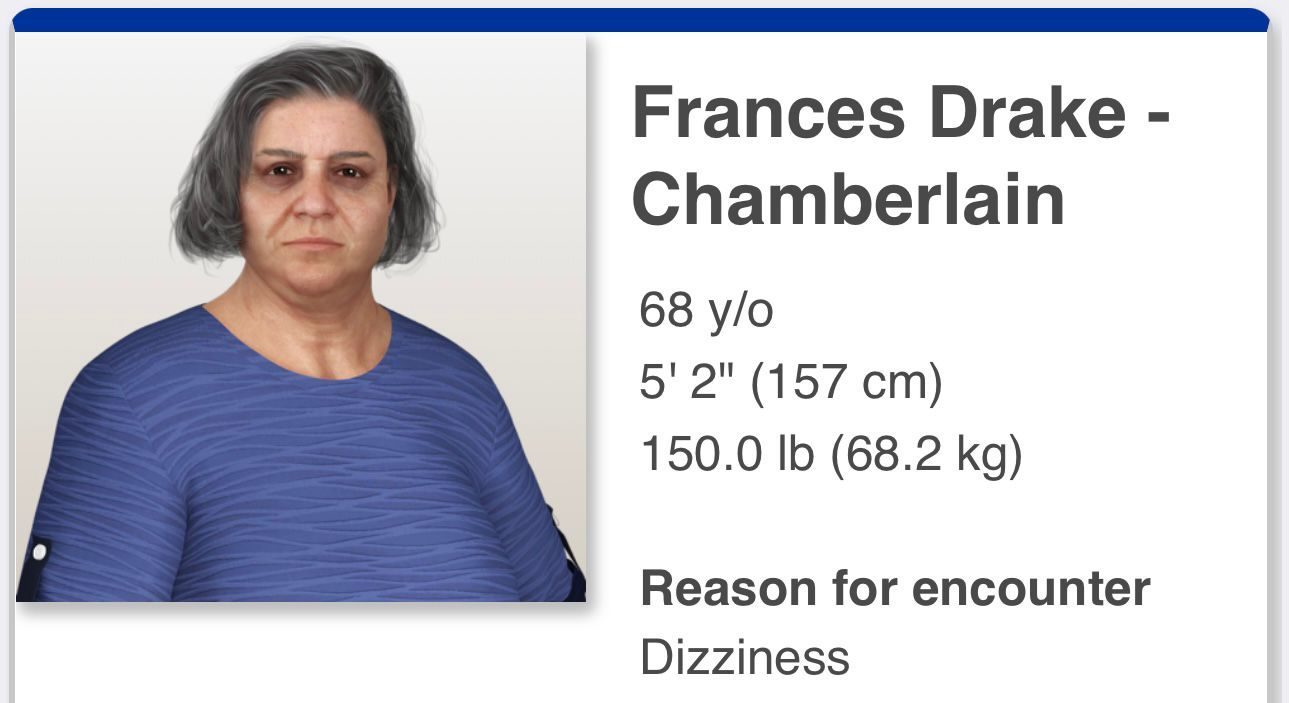
iHuman Frances Drake dizziness
68 y/o
5′ 2″ (157 cm)
150.0 lb (68.2 kg)
Reason for encounter
Dizziness
Location
Outpatient clinic with x-ray, ECG, and laboratory capabilities
Frances Drake Dizziness History Questions
- How can I help you today? – I have been having recurrent sudden, brief episodes of dizziness for the past 2 weeks
- Do you have any other symptoms or concerns we should discuss? – just my dizzy episodes
- Do you have a dizziness problem? – Yes. I’ve had recurrent short episodes of dizziness for the past 2 weeks
- When did your dizziness start? – It started about 2 weeks ago
- What are the events surrounding the start of your dizziness? – When I change my head position, such as when I roll over onto my right side while in bed, it feels like I am spinning around, like the room starts moving around in circles. It also made me want to throw up. But I did not actually vomit
- Tell me about the last time you felt dizzy – Just last night, I had two episodes and could not get back to sleep afterward due to the dizziness.
- Does anything make your dizziness better or worse? – Yes, it is triggered by some changes in my head position. It is quite severe when I turn my head abruptly. The only thing that makes it better is when I hold my head still
- Have you fallen? – Nope
- ……..
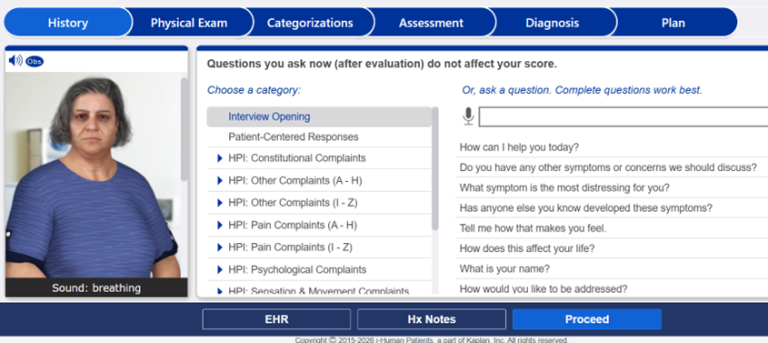
iHuman Frances Drake dizziness Physical Exams Required
- Weight
- Height
- cognitive status
- SpO2
- temperature
- blood pressure
- pulse
- respiration
- temperature
- auscultate heart
- auscultate lungs
- …….
iHuman Frances Drake 68 Year Old Dizziness Case
Evaluating dizziness in older adults can be challenging because symptoms may arise from vestibular, neurologic, cardiovascular, or metabolic conditions. The iHuman Frances Drake dizziness case presents a detailed outpatient scenario involving a 68 year old female with recurrent vertigo-like episodes that require careful history taking, focused physical examination, and evidence-based clinical reasoning. Students working through this iHuman assignment must recognize key symptom patterns, identify red flag findings, and develop an appropriate differential diagnosis and management plan.
For learners searching for comprehensive iHuman Frances Drake 68 year old dizziness answers, this case emphasizes the importance of distinguishing peripheral causes of dizziness from potentially life-threatening central nervous system disorders.
Frances Drake is a 68 year old retired accountant with a history of well-controlled hypertension who presents with a two week history of recurrent dizziness. During the iHuman interview, the patient describes sudden brief spinning sensations triggered by changes in head position, especially when rolling onto her right side in bed or turning her head abruptly. The episodes are associated with nausea, interrupted sleep, and mild fatigue. She reports improvement when she keeps her head still and denies syncope, hearing loss, tinnitus, focal weakness, chest pain, speech difficulty, or gait instability.
One of the most important aspects of this iHuman case is the history questions section. The symptom description strongly guides the differential diagnosis. Students are expected to ask detailed questions about onset, duration, provoking factors, associated symptoms, severity, and relieving factors. The patient repeatedly notes that her dizziness is positional and brief, lasting only a few minutes at a time. This pattern helps narrow the diagnostic possibilities significantly.
The Frances Drake iHuman case also demonstrates the importance of reviewing neurologic and cardiovascular symptoms. Although the patient has hypertension and a family history of stroke and heart disease, she denies focal neurologic deficits, loss of consciousness, palpitations, and exertional symptoms. These negative findings become essential when prioritizing the differential diagnosis and ruling out emergent conditions.
Physical examination findings provide additional high-yield learning points. Vital signs are stable, with blood pressure readings in the normal range and no evidence of orthostatic hypotension. Cardiovascular and respiratory examinations are unremarkable. Neurologic examination reveals intact cranial nerves, normal gait, preserved coordination, and no focal deficits.
A major component of the case physical examination involves positional testing. These findings strongly support a peripheral vestibular process rather than a central neurologic disorder. Hearing assessment is also intact, which helps differentiate vestibular conditions associated with auditory symptoms.
Students completing this iHuman dizziness assignment must also understand the role of diagnostic testing. Common tests considered in the workup include CBC, BMP, CMP, ECG, and MRI brain imaging. The purpose of these studies is not necessarily to confirm the suspected vestibular disorder, but rather to exclude alternative etiologies such as arrhythmia, electrolyte imbalance, stroke, intracranial lesions, or other neurologic pathology. Appropriate test interpretation is an important part of the clinical reasoning process.
Another major educational focus of this case is formulation of the differential diagnosis. Causes of dizziness in older adults are broad and include vestibular disorders, posterior circulation events, medication-related dizziness, vestibular neuritis, Ménière disease, dehydration, and cardiovascular conditions. Students are expected to compare symptom duration, triggering factors, auditory findings, neurologic symptoms, and examination results to prioritize the most likely conditions.
The management plan section of the Frances Drake iHuman case emphasizes evidence-based outpatient care. Key interventions include symptom control, vestibular repositioning maneuvers, patient education, and safety counseling. Learners should discuss strategies to reduce fall risk, improve sleep disruption, and recognize warning signs that would require urgent medical evaluation. Red flag symptoms such as persistent vertigo, unilateral weakness, severe headache, slurred speech, syncope, chest pain, or worsening gait instability warrant immediate reassessment.
This case is an excellent example of how focused history questions and targeted physical examination findings guide clinical decision-making. Students who master this case improve their ability to evaluate dizziness systematically while developing stronger diagnostic reasoning skills for outpatient primary care and neurology settings.
For more iHuman case assistance, SOAP notes, differential diagnosis guidance, and management planning resources, visit iHuman Tutor.