


11 April 2026
No Comments
iHuman assignment
iHuman Facial droop 71 years Week 7 answers NRNP-6560
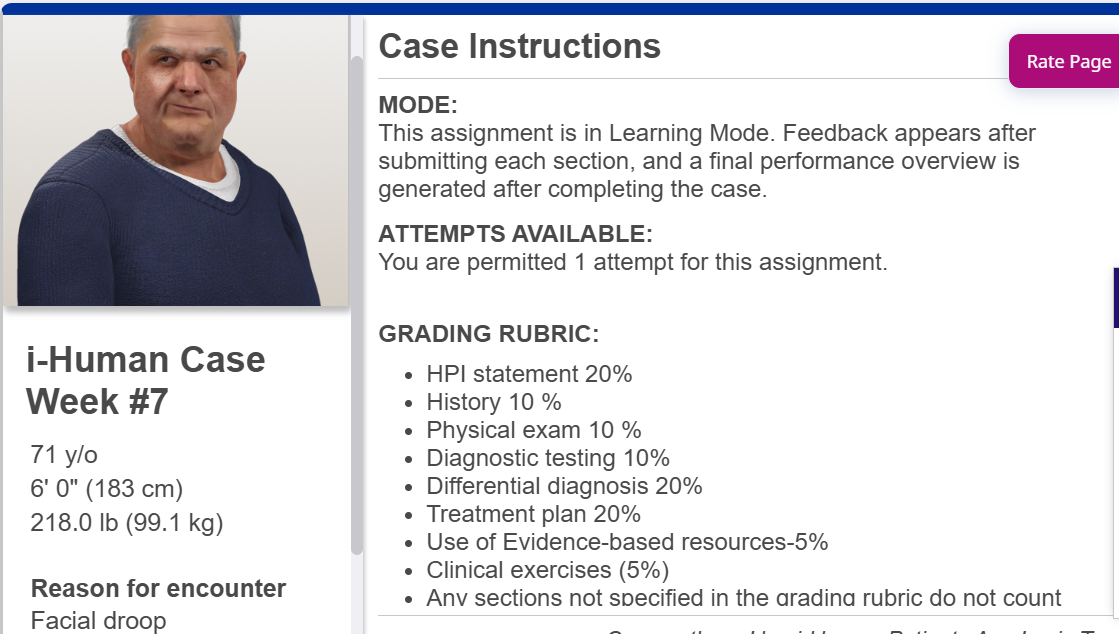
i-Human Case Week #7
71 y/o
6′ 0″ (183 cm)
218.0 lb (99.1 kg)
Reason for encounter
Facial droop
Location
Outpatient clinic with x-ray, ECG, and laboratory capabilities
iHuman Facial droop 71 years Week 7 answers NRNP-6560
History Questions
- How can I help you today?
- Do you have any other symptoms or concerns we should discuss?
- Do you have any allergies?
- Can you tell me about any current or past medical problems you have had?
- How is your overall health?
- Do you have high blood pressure?
- Are you taking any prescription medications?
- Are you taking any over-the-counter or herbal medications?
- Have you had any seizures?
- Do you drink alcohol? If so, what do you drink and how many drinks per day?
- ……..
NRNP-6560 i-Human Case Week #7
Facial droop
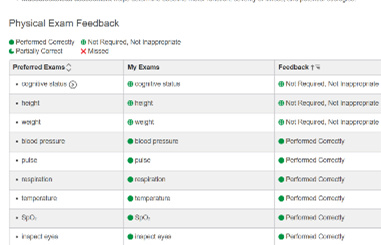
Physical Exams
- Weight
- Height
- cognitive status
- SpO2
- temperature
- blood pressure
- pulse
- respiration
- temperature
- auscultate heart
- auscultate lungs
- assess …….
iHuman Facial Droop 71-Year-Old (Week 7 NRNP-6560)
The iHuman facial droop 71 year old case from Week 7 (NRNP-6560) presents a high-acuity neurological scenario requiring rapid clinical assessment and decision-making. This case emphasizes the importance of targeted history questions, a focused physical examination, forming a critical differential diagnosis, and implementing an urgent management plan.
The patient is a 71-year-old male presenting with sudden-onset facial droop, slurred speech, dizziness, and left-sided weakness. Key history questions reveal symptom onset during a meal, associated diplopia, facial numbness, and arm tingling. His medical history is significant for hypertension, type 2 diabetes, and hyperlipidemia—major risk factors for cerebrovascular events. These findings immediately raise concern for an acute stroke.
During the physical examination, notable findings include left facial droop with intact upper facial motor function, slurred speech, horizontal nystagmus, and left-sided weakness. These signs strongly suggest a central neurological cause rather than a peripheral condition such as Bell’s palsy. Normal gait does not exclude a serious diagnosis, making thorough neurological assessment essential.
The management plan requires immediate emergency intervention, including rapid neuroimaging (CT/MRI), laboratory evaluation, and consideration of thrombolytic therapy if within the treatment window. Ongoing management includes risk factor control, antiplatelet therapy, and possible rehabilitation.
For complete iHuman answers and step-by-step guidance, visit 👉 https://ihumantutor.com/facial-droop-71-years-week-7-answers-nrnp-6560/ and explore more resources at 👉 https://ihumantutor.com/.
Mastering this case enhances your ability to recognize life-threatening neurological conditions and strengthens your clinical confidence in emergency care settings.