



12 March 2026
No Comments
iHuman assignment
iHuman Christine Smith Flank pain answers
33 y/o
5′ 6″ (168 cm)
130.0 lb (59.1 kg)
Reason for encounter
Flank pain
Physical Exams Required
- Weight
- Height
- cognitive status
- SpO2
- temperature
- blood pressure
- pulse
- respiration
- temperature
- auscultate heart
- auscultate lungs
- assess …….
Christine Smith iHuman Case Study: A 33-Year-Old Female Presenting With Flank Pain
Introduction to the Christine Smith iHuman Case
The Christine Smith iHuman case explores the clinical evaluation of a 33-year-old female presenting with acute flank pain and associated urinary and systemic symptoms. This case provides an opportunity for nursing and advanced practice nursing students to strengthen their clinical reasoning, patient assessment, and evidence-based decision-making skills through a simulated patient encounter.
Students reviewing the Christine Smith case may be looking for guidance on history questions, physical examination findings, differential diagnosis, and the management plan. Understanding how these components fit together is essential for interpreting the patient presentation and developing an organized clinical assessment.
For learners seeking additional academic support, iHuman case study resources and clinical learning guidance can help them explore available study support and prepare for virtual patient assignments.
Overview of Christine Smith’s Clinical Presentation
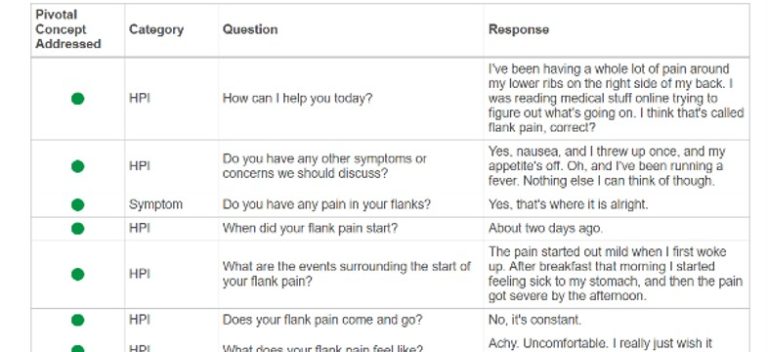
Christine Smith is a 33-year-old female whose primary complaint is right-sided flank pain. Her symptoms began acutely and became sufficiently uncomfortable to interfere with her usual activities. The clinical history describes persistent pain localized to the right posterior flank, accompanied by several symptoms involving the urinary and gastrointestinal systems.
The patient reports fever, chills, painful urination, increased urinary frequency, nausea, and repeated episodes of vomiting. She also describes a previous history of bladder infections. These details provide important context for evaluating the potential source of her symptoms.
The combination of flank pain, fever, and urinary complaints raises concern for an infection involving the upper urinary tract. However, a structured clinical assessment is necessary to distinguish among possible causes and identify complications that could affect treatment decisions.
This presentation illustrates why clinicians must consider the onset, location, severity, duration, and associated features of pain rather than treating flank pain as an isolated complaint.
Understanding the History Questions in the iHuman Case
The history-taking component is an important part of the Christine Smith iHuman assignment. A comprehensive history helps establish the progression of symptoms, identify associated concerns, and clarify relevant medical and medication histories.
Students should understand the purpose of asking focused history questions and how each response contributes to clinical reasoning. The patient’s urinary symptoms, fever, vomiting, and previous bladder infections provide useful information when evaluating a possible urinary tract infection.
The history also demonstrates the importance of assessing symptom severity and its effect on daily functioning. Information about oral intake, medication use, previous infections, and other relevant health factors can influence the urgency of evaluation and the suitability of outpatient management.
Rather than interpreting individual responses in isolation, students should practice synthesizing the patient’s subjective information into a concise and clinically meaningful presentation.
Physical Examination: Important Clinical Considerations
The physical examination adds objective information to the patient’s reported symptoms. In the Christine Smith case, particular attention is given to the abdominal and genitourinary systems.
The documented examination identifies right costovertebral angle (CVA) tenderness and mild suprapubic tenderness. No left CVA tenderness is present, and the external genital and bimanual pelvic examinations are reported as normal.
These findings help localize the patient’s discomfort and support the need to investigate urinary tract pathology. Nevertheless, examination findings must be interpreted alongside the patient’s history and any available laboratory results.
For students seeking to understand the physical examination component, the goal is not simply to memorize findings. It is to recognize their clinical significance, distinguish subjective symptoms from objective observations, and explain how examination results influence the assessment.
Differential Diagnosis and Clinical Reasoning
Flank pain accompanied by fever, urinary symptoms, and vomiting can occur in several clinical conditions. The differential diagnosis should consider urinary tract infection involving the kidney, urinary obstruction or nephrolithiasis, and other abdominal or genitourinary causes when supported by the clinical presentation.
Acute pyelonephritis is an important consideration in this case because it can produce flank pain, fever, chills, nausea, vomiting, and urinary symptoms. However, the final clinical assessment should incorporate the complete history, physical examination, diagnostic findings, and evaluation for potential complications.
A strong iHuman case analysis explains why certain conditions are considered, what findings support or weaken each possibility, and which serious alternatives must not be overlooked.
Diagnostic Evaluation and the Management Plan
The diagnostic and treatment components of the Christine Smith case emphasize the relationship between clinical assessment and evidence-based care. When an upper urinary tract infection is suspected, clinicians must determine whether further testing is needed to confirm the suspected cause, identify the responsible organism, and assess the possibility of antimicrobial resistance.
The management plan should address appropriate antimicrobial treatment, symptom relief, hydration when clinically appropriate, and the patient’s ability to tolerate oral fluids and medications. Decisions regarding outpatient care versus hospital evaluation depend on the patient’s overall condition, severity of illness, risk factors, and ability to maintain oral intake.
Students should also understand the importance of medication safety, antibiotic adherence, culture-directed treatment when indicated, and clear follow-up instructions. Worsening symptoms, persistent fever, repeated vomiting, or signs of systemic illness may require urgent reassessment.
A complete case review should explain the clinical rationale behind management decisions rather than presenting treatment as a list of unrelated interventions.
How to Approach the Christine Smith iHuman Assignment
Students working through this case can benefit from organizing their analysis into a logical sequence:
Review the presenting complaint and symptom progression.
Identify pertinent positive and negative historical findings.
Interpret the relevant physical examination findings.
Consider appropriate differential diagnoses and potential complications.
Understand the role of diagnostic evaluation.
Develop an evidence-based management and follow-up plan.
This structure supports a more complete understanding of the clinical encounter and helps students connect assessment findings with diagnostic reasoning and treatment decisions.
Get Comprehensive Christine Smith iHuman Case Support
The Christine Smith case demonstrates the importance of integrating patient history, physical examination, differential diagnosis, and clinical management into a coherent assessment. For nursing students and advanced practice nursing learners, reviewing these connections can improve confidence when approaching similar virtual patient scenarios.
If you need more detailed academic guidance, visit iHuman Tutor to explore available learning resources and case-study support. A comprehensive case review can help you better understand the reasoning behind the encounter and prepare your own assignment documentation.
Explore related learning resources:
Use these resources to strengthen your understanding of the Christine Smith iHuman case while completing your coursework according to your instructor’s requirements.