



7 February 2025
No Comments
iHuman assignment
Stefon Owens, Roger Miller, Jose Gonzalez
Age: 42 y/o
Height: 7’1”
Weight: 180lbs
Reason for encounter: diarrhoea
HISTORY QUESTIONS (SUBJECTIVE):
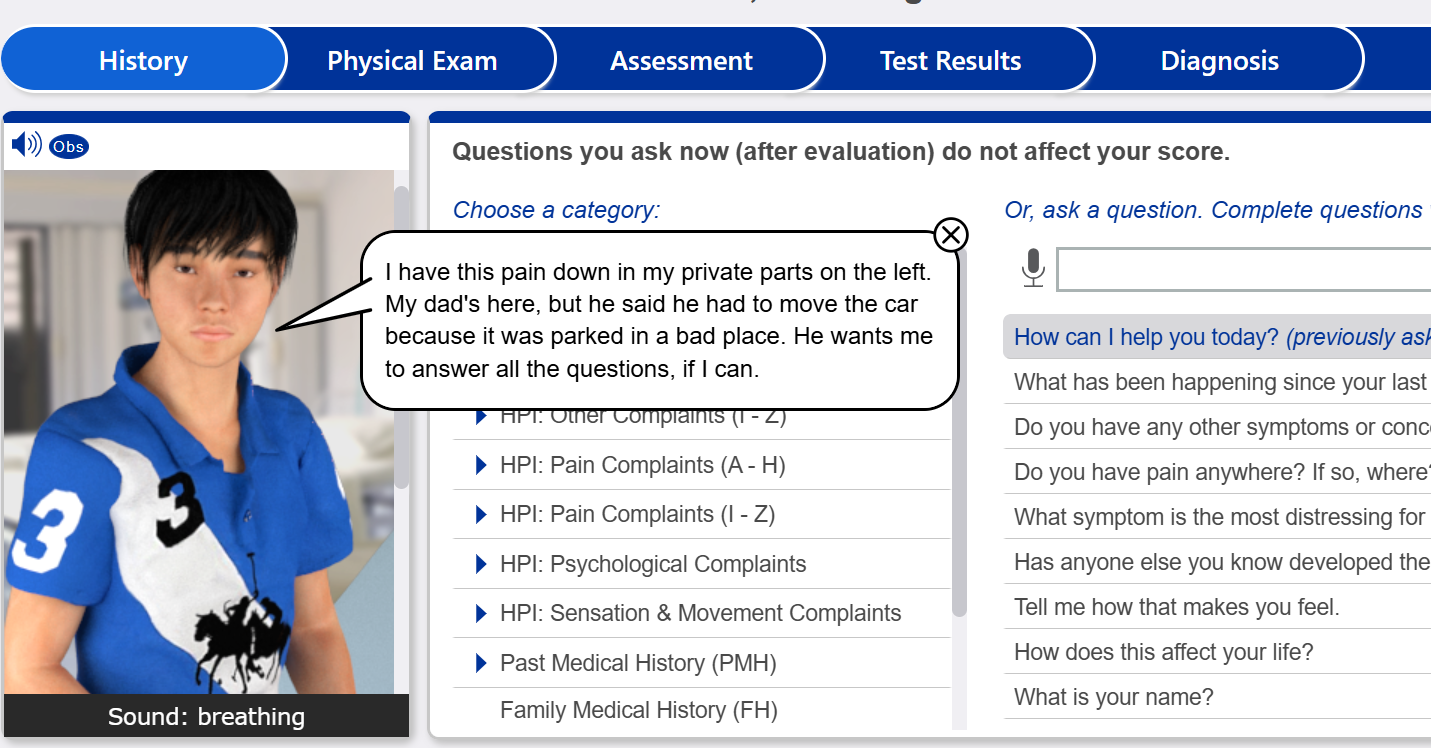
- How can I help you today? I have had terrible diarrhea I just feel wiped out!
- Do you have any other symptoms or concerns? We should discuss? Well, I have a headache. Also, my mouth feels like someone stuck a bunch of cotton in it.
- Is there any blood in your stools or with your bowel movement?. Yes, I started seeing blood in the toilet. It’s really more like streaks of blood in with the diarrhea. That scared me a bit and so I finally thought I ought to come in.
- Do you have nausea and or vomiting? Only very mildly nauseated. But not worth talking about. It’s not really a problem I haven’t thrown up at all.
- Do you have any pain in your abdomen? Yes, my whole stomach feels sore and crampy.
- When did your abdominal pain start? Just before the diarrhea episodes but now it is sore all the time.
- Does the pain in your abdomen radiate someplace else? Where? No.
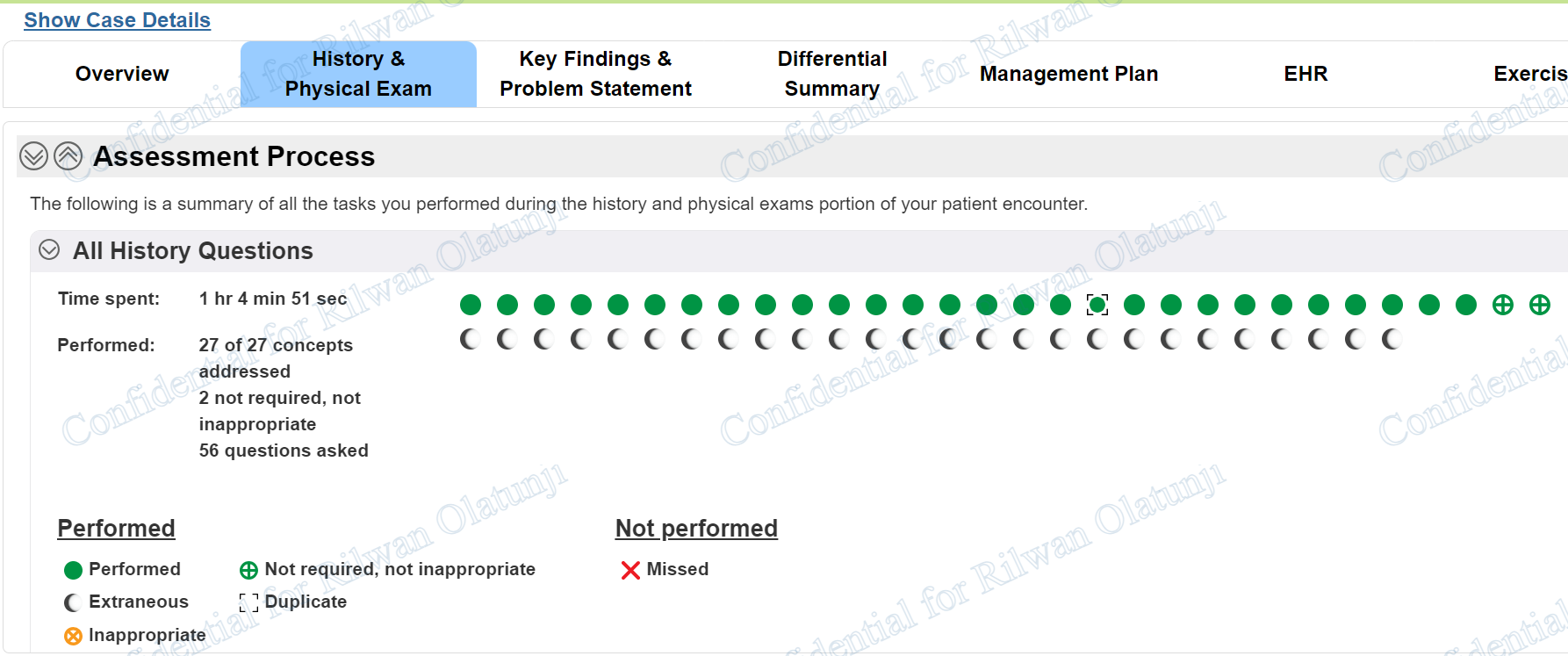
- ……..Get all history questions
Required Physical Exams
- Auscultate abdomen
- Auscultate heart
- Auscultate lungs
- Examine pupils
- Inspect mouth/pharynx
- Inspect…..
- Get all required physical exams for the case
Test Results
BMP: BUN 26-elevated
C.Diff: negative
Colon Biopsy: cancelled because of ID of infectious etiology
CBC: WBCs 13,500-elevated
Complete the following components in the i-Human Virtual Patient Encounter for the required case addressing the Cardiovascular system.
- Focused Health History
- Complete a focused health history. Scores are automatically calculated within the i-Human platform when the health history is submitted.
- Focused Physical Exam
- Complete a focused physical exam. Scores are automatically calculated within the i-Human platform when the health history is submitted.
- EHR Documentation-Subjective Data
- Document the history of present illness (HPI) and focused review of systems (ROS). Documentation must be:
- accurate
- detailed
- written using professional terminology
- pertinent to the chief complaint
- includes subjective findings only
- Document the history of present illness (HPI) and focused review of systems (ROS). Documentation must be:
- EHR Documentation-Objective Data
- Document physical exam findings. Documentation must be:
- accurate
- detailed
- written using professional terminology
- pertinent to the chief complaint
- include objective findings only
- Document physical exam findings. Documentation must be:
- Problem Statement
- Document a brief, accurate problem statement using professional language. Include the following components:
- name or initials, age
- chief complaint
- positive and negative subjective findings
- positive and negative objective findings
- Document a brief, accurate problem statement using professional language. Include the following components:
- Differential diagnosis (DDx)
- Select the most appropriate differential diagnoses for the encounter. Your score will automatically calculate after the focused physical exam is submitted.
- Differential diagnosis ranking
- Rank the differential as lead and alternate diagnoses
- Must Not Miss
- Identify the must not miss (MNM) diagnoses
- Diagnostic tests
- Select the appropriate diagnostic tests for the virtual patient. Once selected, review the results provided.
- Management Plan
- Use the expert diagnosis provided to create a pertinent comprehensive, evidence-based management plan. If a specific component of the management plan is not warranted (i.e., no referrals are appropriate for the virtual patient), document that no intervention is warranted. Include the following components:
- diagnostic tests
- medications: write a specific prescription for each medication, including over-the-counter medications
- suggested consults/referrals
- client education
- follow-up, including time interval and specific symptomatology to prompt a sooner return
- cite at least one relevant scholarly source as defined by program expectationsLinks to an external site.
- Click “Submit” once the case is complete and Download the i-Human Virtual Patient Encounter report.
- Use the expert diagnosis provided to create a pertinent comprehensive, evidence-based management plan. If a specific component of the management plan is not warranted (i.e., no referrals are appropriate for the virtual patient), document that no intervention is warranted. Include the following components:
- Reflection
Address the following questions:
- How would your treatment plan change if your client admitted to food insecurity? What resources are available in your community that would be useful for senior citizens experiencing food insecurity and dietary restrictions based on medical diagnoses?
- write 150-300 words in a Microsoft Word document
- demonstrate clinical judgment appropriate to the virtual patient scenario
- cite at least one relevant scholarly source as defined by program expectations
- communicate with minimal errors in English grammar, spelling, syntax, and punctuation
- How would your treatment plan change if your client admitted to food insecurity? What resources are available in your community that would be useful for senior citizens experiencing food insecurity and dietary restrictions based on medical diagnoses?