

31 January 2025

No Comments

iHuman assignment


Kevin Dale

58 y/o

5′ 10″ (178 cm)

205.0 lb (93.2 kg)

Reason for encounter

Progressive dyspnea

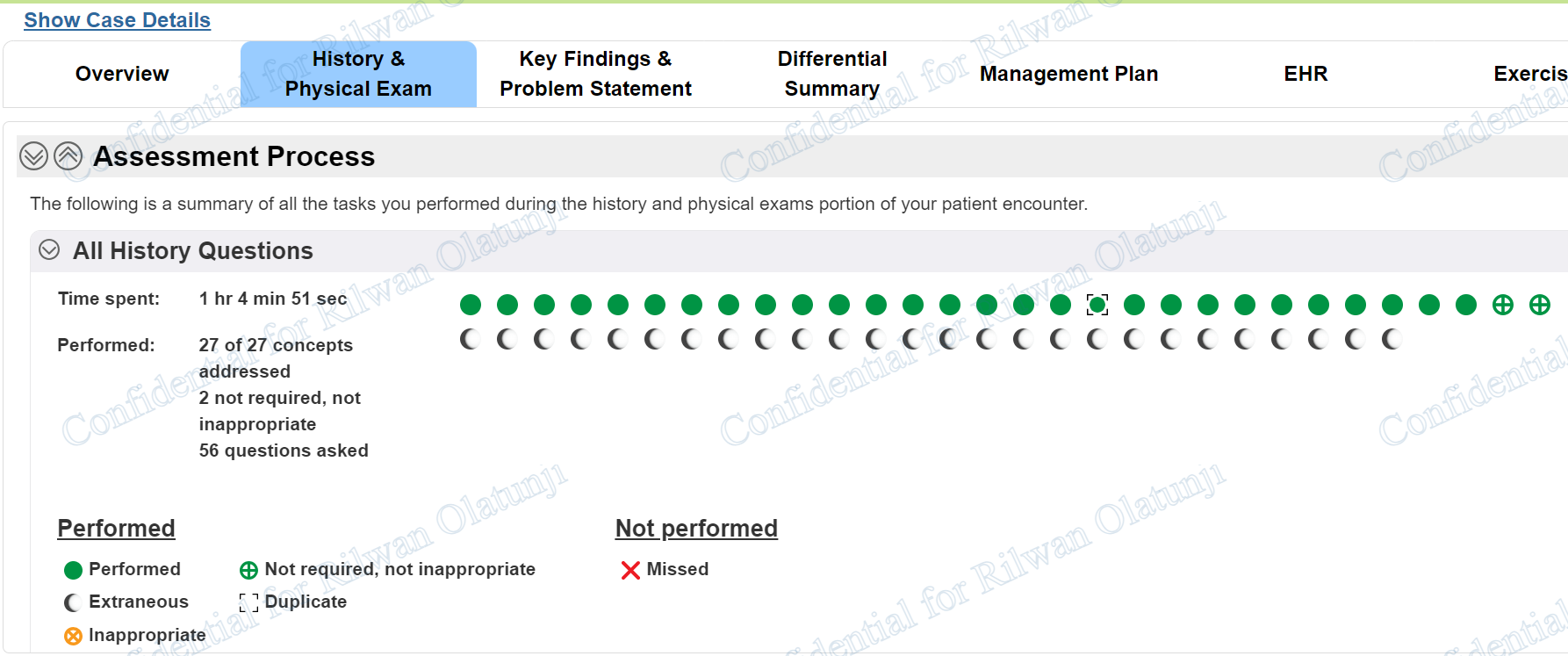
Interview History Questions for Kevin Dale

  1. What is your name?
  2. How can I help you today?
  3. Do you have any other symptoms or concerns we should discuss?
  4. What has been happening since your last visit?
  5. Do you have pain anywhere? If so, where?
  6. What symptom is the most distressing for you?
  7. Tell me how that makes you feel.
  8. How does this affect your life?
  9. What happened?
  10. Are you coughing up blood
  11. Do you have unusual heartbeats (palpitations)
  12. Have you gained or lost weight unintentionally, despite normal appetite and exercise?
  13. Have you noticed swelling in any part of your body
  14. Do you have a cough
  15. Do you have any other symptoms or concerns we should discuss
  16. Do you have any pain in your chest
  17. ………….

Physical Exams Required

  1. Weight
  2. Height
  3. cognitive status
  4. SpO2
  5. temperature
  6. blood pressure
  7. pulse
  8. respiration
  9. temperature
  10. auscultate heart
  11. auscultate lungs…….

Get all the complete Kevin Dale case with history questions, physical exam, complete EHR documentation, exercises, case findings, diagnosis, test results, and management plan.


Differential Diagnoses

Below is an updated list of 20 differential diagnoses, with CHF as the lead diagnosis, and the “Must Not Miss” diagnoses clearly identified:

  1. Congestive Heart Failure (Lead Diagnosis)
  2. Acute Coronary Syndrome (Must Not Miss)
  3. Pulmonary Embolism (Must Not Miss)
  4. Ventricular Tachycardia, (Must Not Miss)
  5. …………………

Required Tests

  1. 12 lead ECG
  2. CBC
  3. CMP
  4. ………..


Complete the following components in the i-Human Virtual Patient Encounter for the required case addressing the Cardiovascular system.

  1. Focused Health History
    1. Complete a focused health history. Scores are automatically calculated within the i-Human platform when the health history is submitted.
  2. Focused Physical Exam
    1. Complete a focused physical exam. Scores are automatically calculated within the i-Human platform when the health history is submitted.
  3. EHR Documentation-Subjective Data
    1. Document the history of present illness (HPI) and focused review of systems (ROS). Documentation must be:
      1. accurate
      2. detailed
      3. written using professional terminology
      4. pertinent to the chief complaint
      5. includes subjective findings only
  4. EHR Documentation-Objective Data
    1. Document physical exam findings. Documentation must be:
      1. accurate
      2. detailed
      3. written using professional terminology
      4. pertinent to the chief complaint
      5. include objective findings only
  5. Problem Statement
    1. Document a brief, accurate problem statement using professional language. Include the following components:
      1. name or initials, age
      2. chief complaint
      3. positive and negative subjective findings
      4. positive and negative objective findings
  6. Differential diagnosis (DDx)
    1.  Select the most appropriate differential diagnoses for the encounter.  Your score will automatically calculate after the focused physical exam is submitted.
  7. Differential diagnosis ranking
    1.  Rank the differential as lead and alternate diagnoses
  8. Must Not Miss
    1.  Identify the must not miss (MNM) diagnoses
  9. Diagnostic tests
    1.  Select the appropriate diagnostic tests for the virtual patient. Once selected, review the results provided.
  10. Management Plan
    1. Use the expert diagnosis provided to create a pertinent comprehensive, evidence-based management plan. If a specific component of the management plan is not warranted (i.e., no referrals are appropriate for the virtual patient), document that no intervention is warranted. Include the following components:
      1. diagnostic tests
      2. medications: write a specific prescription for each medication, including over-the-counter medications
      3. suggested consults/referrals
      4. client education
      5. follow-up, including time interval and specific symptomatology to prompt a sooner return
      6. cite at least one relevant scholarly source as defined by program expectationsLinks to an external site.
    2. Click “Submit” once the case is complete and Download the i-Human Virtual Patient Encounter report.
  11. Reflection

Address the following questions:

    1. How would your treatment plan change if your client admitted to food insecurity? What resources are available in your community that would be useful for senior citizens experiencing food insecurity and dietary restrictions based on medical diagnoses?
      1. write 150-300 words in a Microsoft Word document
      2. demonstrate clinical judgment appropriate to the virtual patient scenario
      3. cite at least one relevant scholarly source as defined by program expectations
      4. communicate with minimal errors in English grammar, spelling, syntax, and punctuation